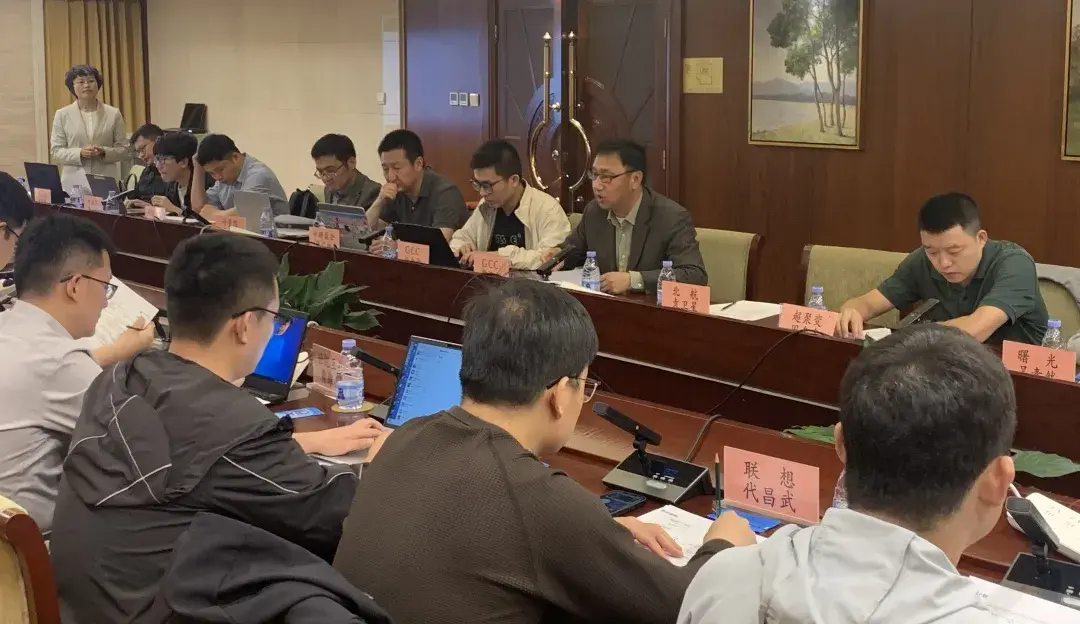
At the beginning of the meeting, representatives of the four joint initiating organizations delivered remarks, emphasizing the urgency and necessity of promoting the standardized and efficient deployment of liquid cooling technology in the data center sector. With the explosive growth of data, traditional air-cooling technology has become increasingly unable to meet the cooling needs of high-power-density data rooms. Liquid cooling technology, with its advantages in efficient heat dissipation, energy saving, and consumption reduction, has become an inevitable trend for the future development of the industry.
However, there are still many problems in the current deployment of liquid-cooled data rooms. Compatibility issues among equipment, materials, and working fluids occur from time to time, resulting in long deployment cycles and high costs, and restricting the widespread application of liquid cooling technology. This is also the core challenge that the Joint Initiative urgently seeks to solve.
The Joint Initiative has clear objectives. It is committed to releasing compatibility test results for secondary-side liquid cooling equipment, materials, and working fluids, forming a recommended resource pool of vendors and models, and continuously correcting the resource pool through actual deployment data.
For users, previous data room deployment often required repeated testing and debugging due to compatibility issues, resulting in long waiting periods. Through the Joint Initiative, after purchasing equipment, users will be able to deploy and use it quickly, greatly reducing the time cost of data room construction, while improving system operation reliability and reducing failure risks caused by compatibility issues.
Server manufacturers can also benefit from this. They can not only reduce the waiting time caused by compatibility testing of racks and servers and achieve rapid delivery, but also save a large amount of compatibility testing investment and later problem analysis costs, allowing more resources to be invested in core technology R&D.
Working fluid manufacturers can reduce compatibility testing investment without disclosing confidential formulas or involving their own interests, and increase market share through the promotion of the Joint Initiative. Material manufacturers can also reduce testing investment, expand market share, standardize the use of secondary materials, and reduce production risks and costs caused by frequent replacement of secondary materials.
At the meeting, representatives from all parties conducted in-depth and active discussions on the deployment of liquid cooling technology and pain points in actual use. User representatives from communications, internet, and universities shared failure cases in large-scale data center construction caused by poor compatibility between liquid cooling materials and working fluids, such as coolant leakage and equipment corrosion, which seriously affected the stable operation of data centers.
Representatives from the server sector pointed out that due to the lack of unified compatibility standards, the adaptation process between servers and liquid cooling components is full of difficulties, increasing the product R&D and delivery cycle. In particular, compatibility between working fluids and liquid cooling materials became the focus of discussion.
At the same time, participants put forward many requirements regarding standardization, industrial collaboration, and industrial ecosystem development. All parties agreed that only by establishing a unified standards system, strengthening the implementation of standards, and forming a feedback loop can the healthy development of the liquid cooling industry be promoted.
This closed-door seminar focused on in-depth discussions of key contents such as the operational rules, organizational structure, and detailed schedule of the “Zero Issues, Zero Waiting for Liquid-Cooled Data Center Deployment” Joint Initiative.
The organizers gave a detailed introduction to the organizational method of the Joint Initiative, including the composition of the action management team, work roles, and division of responsibilities. In terms of schedule, it was clarified that the drafting of working fluid specifications would be organized and completed in the near term, and the first batch of recommended resource pools would be released before the end of August.
The operational procedures of the initiative were also carefully planned, with responsible units for each stage clearly defined to ensure orderly progress. To contribute to the development of liquid cooling technology, participating representatives actively took part, signed up to join the initiative, and will immediately start the drafting of working fluid specifications.
The successful convening of this meeting officially launched the Joint Initiative and formulated a clear implementation plan and management method. The active participation of representatives from many fields will greatly promote the promotion and application of liquid cooling technology in data centers, and is expected to accelerate industry technological innovation, provide strong support for the efficient and stable operation of data centers, and lead the liquid cooling industry into a new stage of development.
Welcome to join.
Mr. Miao: miaofy@gccorg.com
Mr. Yang: yangjinyu@gccorg.com

 High Performance Computing Development Group(HPC DG)