On Thursday, April 10, 2025, the first plenary meeting of the Intelligent Computing Industry Development Committee of the Global Computing Consortium (GCC) was successfully held in Beijing, marking the official establishment of the committee. The English abbreviation of the committee is ICI DG, and its Chinese abbreviation is ICI-DG.
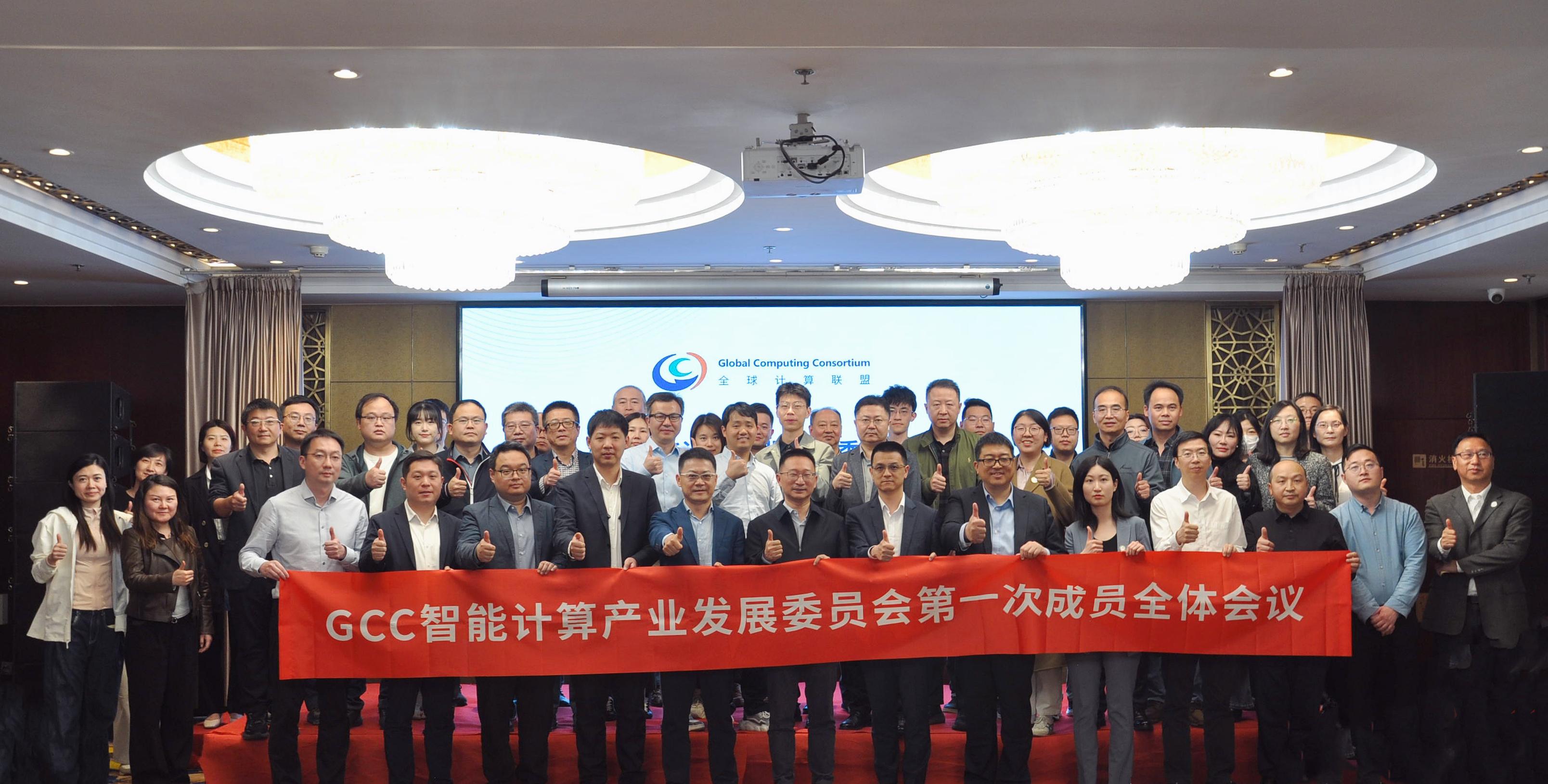
his meeting was not only an in-depth discussion on the future development of the intelligent computing industry, but also an important step in supporting the global development of the intelligent computing industrial ecosystem. Representatives from leading organizations including China Telecom Corporation Limited, Huawei Technologies Co., Ltd., China Academy of Information and Communications Technology, and China Electronics Standardization Institute, as well as 31 organizations including Beijing National Financial Technology Certification Center, iFLYTEK Co., Ltd., and Sichuan Huakun Zhenyu Intelligent Technology Co., Ltd., jointly witnessed this important moment.
Industry Expectations: Gathering Industry Strength to Pursue High-Quality Development
Gao Wen, Chair of the GCC Strategic Advisory Committee and Academician of the Chinese Academy of Engineering, delivered the opening remarks. He set the tone and direction for the meeting with three strategic directions: collaboration on technical standards, building an open-source and open ecosystem, and advancing the computing power network plan.
Shao Guanglu, Director of the Science and Technology Committee of China Telecom Corporation Limited, also delivered an inspiring speech. He stated that “artificial intelligence is both an engine and multiplier of social and economic development, as well as a differentiator of social and economic development,” and emphasized that the intelligent computing industry “needs to strengthen cooperation in order to achieve high-quality development,” which resonated strongly with the participants.
Chi Xuebin, Vice Chair of the Global Computing Consortium and Researcher at the Computer Network Information Center of the Chinese Academy of Sciences, delivered a speech and read out on site the resolution of the Fourth Meeting of the First Board of Directors of the Global Computing Consortium on the establishment of the Intelligent Computing Industry Development Committee.
Voting and Election: Forming the Management Team and Clarifying the Development Direction
The meeting reviewed and approved the Plan for the First Plenary Meeting of the GCC Intelligent Computing Industry Development Committee and the Working Regulations of the GCC Intelligent Computing Industry Development Committee, laying a solid foundation for the standardized operation of the committee.
The meeting then elected the first Management Committee and voted to appoint the first Secretary-General:
Chair: Dong Tao, General Manager of the Cloud Network Development Department (International Department), China Telecom Corporation Limited;
Vice Chairs: Wei Kai, Director of the Artificial Intelligence Institute, China Academy of Information and Communications Technology; Yang Lei, Deputy Director of the Information Technology Center, China Electronics Standardization Institute; Zhang Huahua, Vice President of Huawei Computing Product Line;
Members: Li Bowen, Head of the Testing Department, Beijing National Financial Technology Certification Center; Liu Xiao, General Manager of the Intelligent Computing Business Department, iFLYTEK; Zhao Yanjun, General Manager of the R&D Center, Sichuan Huakun Zhenyu Intelligent Technology Co., Ltd.;
Secretary-General: Li Peiyuan, General Manager of the Ecosystem Development Department, Tianyi Cloud Technology Co., Ltd.
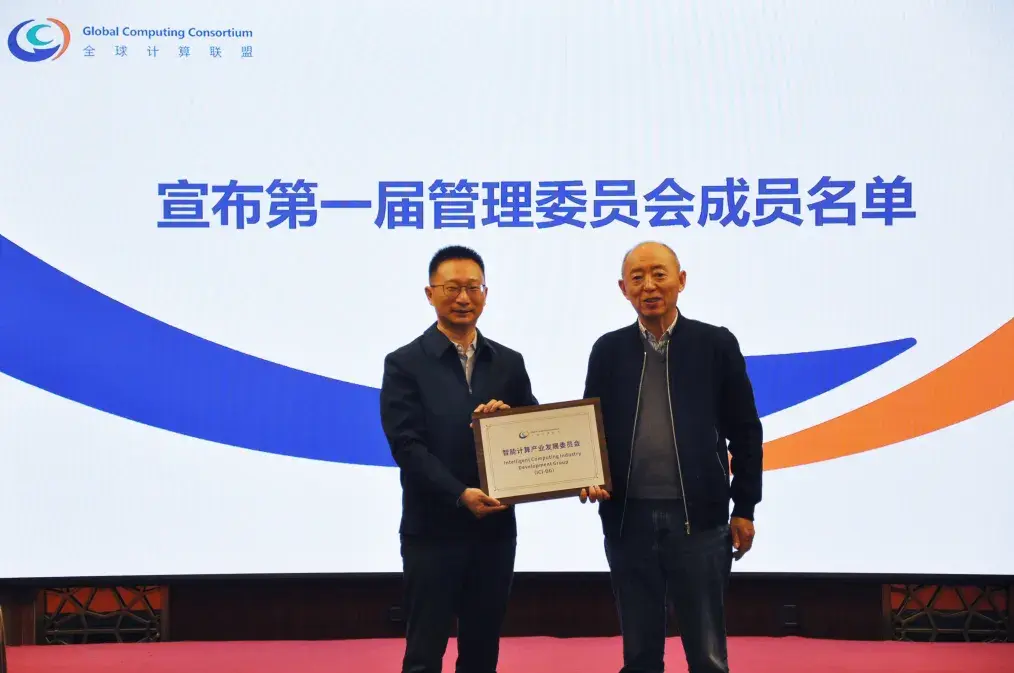
After the voting and election were successfully completed, Chi Xuebin, Vice Chair of the Global Computing Consortium, presented the plaque to the Intelligent Computing Industry Development Committee. The committee officially set sail. In the future, it will be committed to gathering industry resources from industry, academia, research, and application, leading the development direction of the intelligent computing industry, enriching the intelligent computing industrial ecosystem, and promoting the implementation of intelligent computing practices.
“The Intelligent Computing Industry Development Committee will uphold GCC’s values of ‘openness, innovation, collaboration, and win-win,’ strengthen investment in top-level design, increase the traction of technological innovation, promote ecosystem development, and facilitate the exploration and practice of innovative application scenarios. Together with colleagues across the industry, we will write a new chapter for the intelligent computing industry,” said Dong Tao, the newly elected Chair of the committee, as he systematically explained the committee’s future work plan and demonstrated a firm commitment and clear vision for future work.
Zhang Huahua, Vice Chair of the committee, stated that the Intelligent Computing Industry Development Committee is a platform for building technical standards and engineering standards for the intelligent computing industry. Going forward, it will promote the “construction of data engineering standards and advance AI large models into industries.”
Yang Lei, Vice Chair of the committee, suggested that new working groups should be established based on the new business needs of member organizations, or fully integrated with existing working groups, so as to enhance the influence of the committee.
Liu Xiao, Member of the committee, stated that the Intelligent Computing Industry Development Committee is a platform for ecosystem collaboration in the intelligent computing industry, and will “build model collaboration standards and promote collaboration among closed-source models” based on the committee.
Li Peiyuan, Secretary-General of the committee, introduced in detail the preparatory group’s preliminary thinking on the background, development goals, and work directions of the committee.
Project Initiation and Decision-Making: Focusing on Key Projects and Promoting Industrial Practice and Implementation
The Management Committee also reviewed and approved five working group project initiation reports.
“Jointly promoting the development of the AI open-source ecosystem and building the most influential open-source community platform.” At the meeting, Li Baolong from Tianyi Cloud’s Modelers Community delivered a report on the Project Initiation of Open-Source Collaboration Work, which attracted broad attention from participants. The new ideas for cooperation and development also attracted active participation from member organizations. The Management Committee unanimously approved the establishment of the Open-Source Collaboration Working Group, its key work plan, and relevant personnel appointments.
At the meeting, Li Shouping, Vice President of Huawei Ascend Business, delivered a report on the Project Initiation of Computing Data Format Work, emphasizing the importance of data format evolution in improving the efficiency of large-model training and inference and accelerating AI application implementation. The Management Committee unanimously approved the establishment of the Computing Data Format Working Group, its key work plan, relevant personnel appointments, and the project initiation of the HiF8 floating-point data format standard.
“Breaking down the ecosystem silos of heterogeneous computing vendors, building the combined strength of heterogeneous chips, achieving interconnection and efficient collaboration among heterogeneous computing resources, and continuously driving collaborative development of the intelligent computing industry.” Lu Gang from China Telecom Research Institute delivered a report on the Project Initiation of Heterogeneous Computing Collaboration Work, pointing out the diversity and complexity of current computing power demands and proposing corresponding solutions. The Management Committee unanimously approved the establishment of the Heterogeneous Computing Collaboration Working Group, its key work plan, and relevant personnel appointments.
Wang Yue from China Academy of Information and Communications Technology delivered a report on the Project Initiation of Intelligent Computing Services Work, noting that there is a huge gap between building intelligent computing centers and building them well, and between building them well and using them well. The Intelligent Computing Services Working Group is committed to creating intelligent computing services that are “faster to deploy, more stable to operate, better in performance, faster to develop, and faster to migrate.” The Management Committee unanimously approved the establishment of the Intelligent Computing Services Working Group, its key work plan, relevant personnel appointments, and the project initiation of the intelligent computing center maturity assessment project.
Tian Jiameng from Vastdata delivered a report on the Project Initiation of Vector Database Work, further revealing the future direction and technical challenges of data processing. “In the era of information explosion, whoever can find the needed information faster will gain the initiative.” The Management Committee unanimously approved the establishment of the Vector Database Working Group, its key work plan, relevant personnel appointments, and the project initiation of the vector database research report.
Discussion and Outlook: Solving Industry Pain Points, Creating Industry Value, and Promoting Industry Prosperity
At the beginning of the discussion session, Yao Wentao from the Beijing FinTech Industry Alliance was invited to share a presentation titled The Impact and Opportunities of DeepSeek Applications in the Financial Industry. The presentation not only demonstrated the transformative impact of AI technology, but also provided valuable experience and inspiration for other industries exploring AI applications.
Focusing on the key work directions of the Intelligent Computing Industry Development Committee, member representatives actively spoke and jointly offered suggestions for the development of the committee.
In the final summary session, Peng Peng, Secretary-General of the Global Computing Consortium, also expressed expectations for the work of the committee. He suggested benchmarking against world-class industry organizations. The Intelligent Computing Industry Development Committee should not only work on technologies and standards, but also strive to realize the implementation of technologies and standards and the improvement of the ecosystem. Corresponding market share is also one of the important measurement indicators.
The successful convening of this meeting will undoubtedly have a far-reaching impact on accelerating the R&D and application of intelligent computing technologies and promoting industrial upgrading. In the future, the GCC Intelligent Computing Industry Development Committee will focus on four major directions: promoting industry consensus, building standards and certification, creating an ecosystem, and advancing industry promotion. It will lead the development direction of the intelligent computing industry, enrich the intelligent computing industrial ecosystem, promote the implementation of intelligent computing practices, and build a more intelligent digital world.
Welcome to join the GCC Intelligent Computing Industry Development Committee.

 High Performance Computing Development Group(HPC DG)