On May 30, the 2025 Liquid Cooling Technology Forum, themed “Open Liquid Cooling Unlocks the Potential of AI Computing Power,” successfully concluded in Beijing. The forum was jointly organized by the Open Liquid Cooling Committee of the Global Computing Consortium (GCC), the Open Computing Technical Committee (OCTC) of the China Electronics Standardization Association (CESA), the New Generation Computing Standards Industry Committee (NGCS), and Yiqi Research Institute.
Nearly 150 experts, scholars, industry pioneers, and ecosystem partners from academia and industry gathered to discuss the coordinated development of liquid cooling technologies and AI computing power within an open ecosystem. Participants also jointly witnessed the official launch of the “Dual-Zero Deployment for Liquid-Cooled Data Centers” Joint Initiative.
Opening Remarks: Building an Open Ecosystem and Breaking Through Technical Bottlenecks
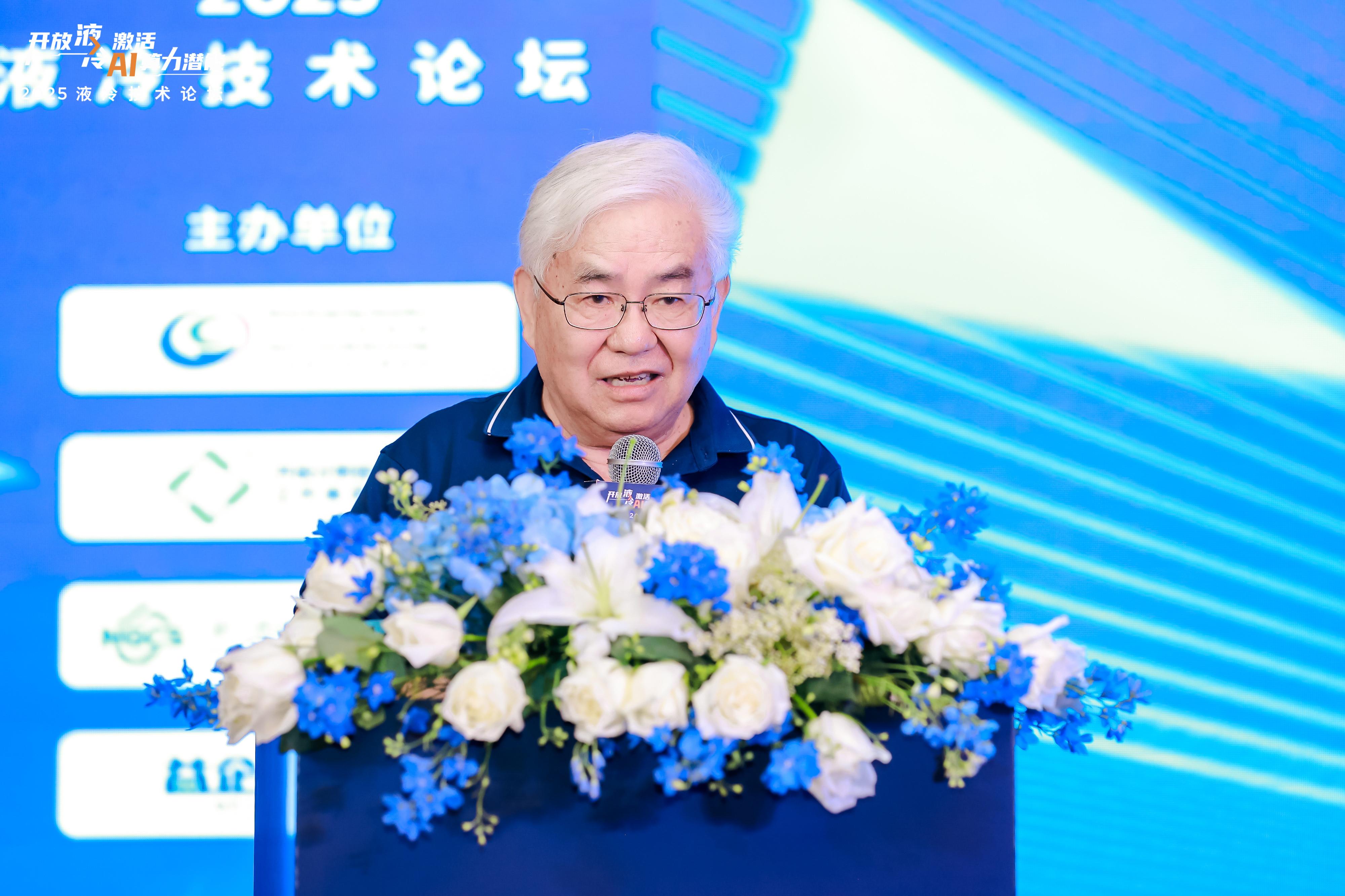
Academician Zheng Weimin, Member of the GCC Strategic Advisory Committee, drew on practical examples of AI applications in daily life and learning, and shared experience in applying liquid cooling technologies in research scenarios. He emphasized the need to connect the full chain of “R&D, testing, procurement, and deployment,” promote liquid cooling technologies from pilot applications to standardized adoption, and called on industry enterprises and experts to jointly build an open ecosystem.
Zhang Chun, Chair of the Management Committee of the GCC Open Liquid Cooling Committee, pointed out that as intelligent computing scales up and power density continues to increase, the limitations of air cooling in heat dissipation have become increasingly evident. He identified three core tasks for the computing power industry: leading the development of specifications and standards, building standardized host systems, and shaping the initial ecosystem.
He noted that the committee will inject new momentum into the computing power industry through five major initiatives: full-chain standards support, a solid certification system, safeguards under the Dual-Zero Initiative, benchmark demonstration projects, and ecosystem co-development.
Wang Xuemin, Vice Chair of the China Electronics Standardization Association and Internationalization Advisor to GCC, emphasized that liquid cooling is a core solution for addressing the cooling demands of AI computing. However, the industry still faces challenges in standardization, testing and certification systems, deployment, operations, and maintenance.
He suggested strengthening cooperation across standards organizations, extending standardization work into engineering, operations, and maintenance, and leveraging the Dual-Zero Initiative to improve technical quality and reduce application costs.
Technical Presentations: Frontier Solutions and Latest Technology Progress
Wang Shifeng, Technical Expert at Douyin Group, shared ByteDance’s “Dayu” liquid-cooled server architecture. Designed around extreme cost performance, green and low-carbon operation, and rapid delivery, the architecture supports multi-computing compatibility and elastic expansion. It can optimize GPU and general-purpose server architectures, reduce data center PUE, promote large-scale application of liquid-cooled servers, and support the development of green data centers.
Yang Yueyang, Ascend Expert at Huawei Technologies Co., Ltd., introduced an innovative solution combining Ascend supernode architecture with liquid cooling technologies. Based on bus interconnection technologies, the supernode architecture breaks through the limitations of traditional Ethernet interconnection and significantly improves resource utilization. Together with advanced cold-plate cooling, high-reliability design, and end-to-end testing for liquid cooling, the solution brings new breakthroughs to AI computing power development.
Shan Tong, Director of Intelligent Data Center Planning at xFusion Digital Technologies Co., Ltd., discussed the higher requirements that multi-model and multi-chip collaboration place on liquid cooling architectures amid the rapid growth of AI computing demand. He introduced xFusion’s evolution toward an open liquid-cooled rack-scale server architecture compatible with multiple computing systems. The company has launched liquid-cooled rack-scale system forms for general-purpose computing, intelligent computing, and supernodes, supporting mixed deployment of CPUs and AI accelerator modules. Through full cold-plate design, high-density power supply, and intelligent operations and maintenance technologies, the architecture enables efficient computing collaboration and energy efficiency optimization.
Dr. Wang Liangyan, President of the Research Institute at Nanjing Orientleader Technology Co., Ltd., focused on the R&D of key components for liquid cooling systems. She introduced medium- and low-pressure liquid cooling rubber hoses made with special materials, which are suitable for wide-temperature environments, resistant to medium corrosion, and highly sealed. She also presented high-pressure gas-liquid hybrid hoses designed for high-temperature and high-pressure scenarios, where multi-layer structural design improves burst resistance. These technologies provide highly reliable solutions for liquid cooling heat dissipation.
Jin Yuehong, Expert at Beijing Jingdong Century Trading Co., Ltd., shared JD Cloud’s innovative practices in deploying liquid-cooled rack-scale systems. To address high heat-density cooling and dual-carbon challenges in data centers, JD Cloud has optimized delivery and maintenance efficiency through modular design, improved energy efficiency and reduced PUE through efficient cold-plate cooling technologies, and actively promoted technology open sourcing and industry standards development to support liquid cooling standardization and ecosystem collaboration.
Li Shengyi, Project Manager at the China Mobile Information Technology Center, discussed technical exploration around green intelligent computing centers in the AI era. He pointed out that liquid cooling is a key technology for addressing the three major challenges of cooling, power supply, and interconnection in intelligent computing centers. Cold-plate liquid cooling is gradually becoming mainstream in intelligent computing scenarios. When combined with centralized power supply technologies and Scale-Up bus interconnection technologies, it can further improve energy efficiency and overcome communication bottlenecks. China Mobile is also advancing liquid cooling standardization and building an open ecosystem.
Fan Chun, Director of the System Management Laboratory at the Computing Center of Peking University, shared green computing practices in university research scenarios. Peking University has independently built a high-performance computing platform and adopted warm-water cooling technologies to reduce cluster energy consumption. Through its self-developed Hesi computing scheduling system and SCOW computing network platform, the university has optimized resource allocation and connected heterogeneous computing resources, providing strong support for scientific research and innovation in universities.
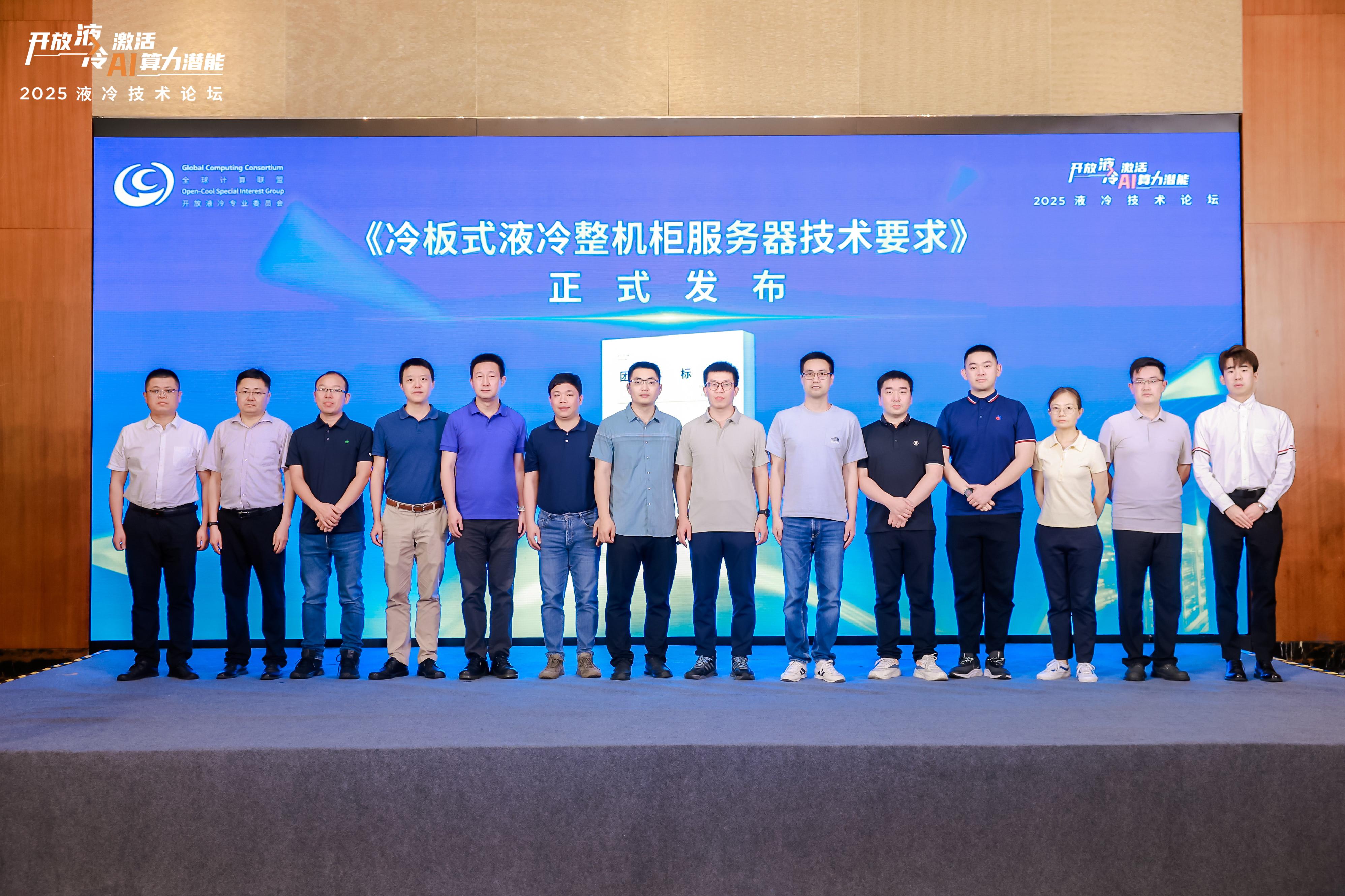
At the GCC Open Liquid Cooling Committee Achievement Release Forum, the GCC Open Liquid Cooling Committee released the Technical Requirements for Cold-Plate Liquid-Cooled Rack-Scale Servers, along with two research reports: Research Report on Leakage Prevention and Leakage Detection Design for Liquid Cooling Systems and Research Report on Open Architecture Compatibility for Diverse Computing Power.
The Technical Requirements for Cold-Plate Liquid-Cooled Rack-Scale Servers standardizes core indicators such as rack dimensions, interface specifications, and cooling efficiency, helping address cross-vendor equipment compatibility challenges. The two research reports focus respectively on leakage risks in liquid cooling systems and the trend toward diversified computing power. They propose full-chain leakage prevention design solutions, intelligent leakage detection technology paths, and collaborative deployment models for diverse computing resources.
Dai Yusheng, Expert at the Integrated Circuit and Information Technology Center of the China Electronics Standardization Institute, provided a comprehensive interpretation of the Technical Requirements for Cold-Plate Liquid-Cooled Rack-Scale Servers. His presentation covered key areas including liquid cooling, power supply, networking, and servers, and defined advanced technologies such as blind-mate design, offering guidance for industry design and manufacturing.
Launch of the Dual-Zero Initiative: Addressing Compatibility Challenges and Promoting Large-Scale Adoption
To address compatibility issues between liquid cooling working fluids and materials such as pipes, connectors, and valves, and to ensure the deployment efficiency and operational reliability of liquid-cooled servers, the GCC Open Liquid Cooling Committee (OC-SIG), together with multiple organizations, jointly launched the “Zero Issues, Zero Waiting for Liquid-Cooled Data Center Deployment” Action Plan, also known as the Dual-Zero Initiative. The initiative aims to achieve the goals of “zero quality issues” and “zero waiting time for data centers.”
Yang Jinyu, Secretary-General of the GCC Open Liquid Cooling Committee, introduced that the Dual-Zero Initiative will establish unified testing solutions and build a compatibility whitelist and recommended resource pool for liquid cooling equipment, materials, and working fluids. These efforts are intended to solve cross-vendor adaptation challenges, shorten deployment cycles, reduce operations and maintenance risks, and promote liquid cooling technology from pilot projects to large-scale application.
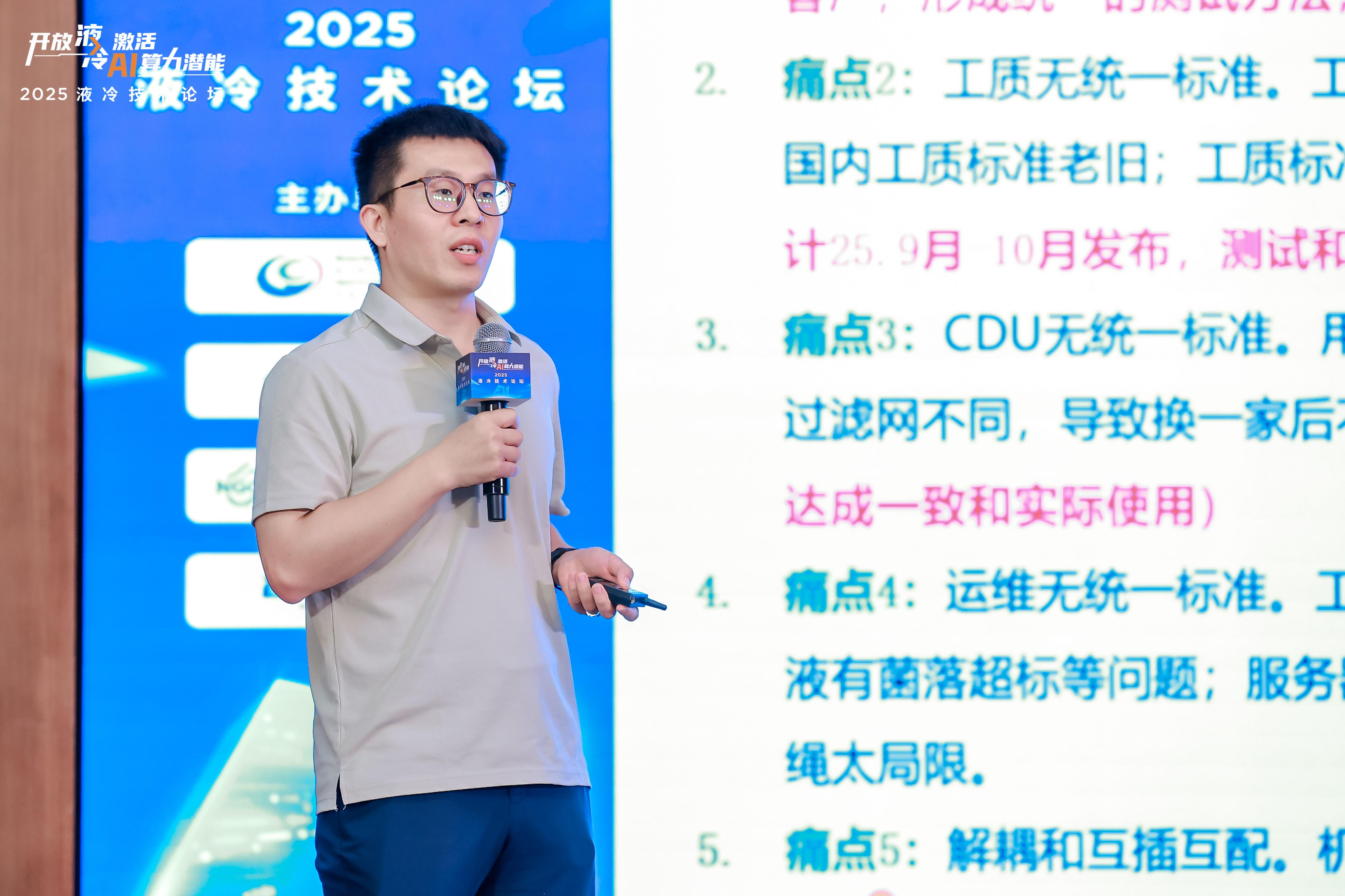
Mo Pengbo, Technical Owner of the Dual-Zero Initiative, explained the phased results of the testing solution. The preliminary drafting of the ethylene glycol working fluid compatibility standard has been completed, laying a foundation for establishing equipment and material compatibility whitelists and conducting full-system joint testing. These efforts will help promote unified industry standards and remove working-fluid compatibility barriers in deployment.
Round table Discussion: Procurement Perspective Focuses on the Full Lifecycle and Calls for Standards Coordination and Technological Innovation
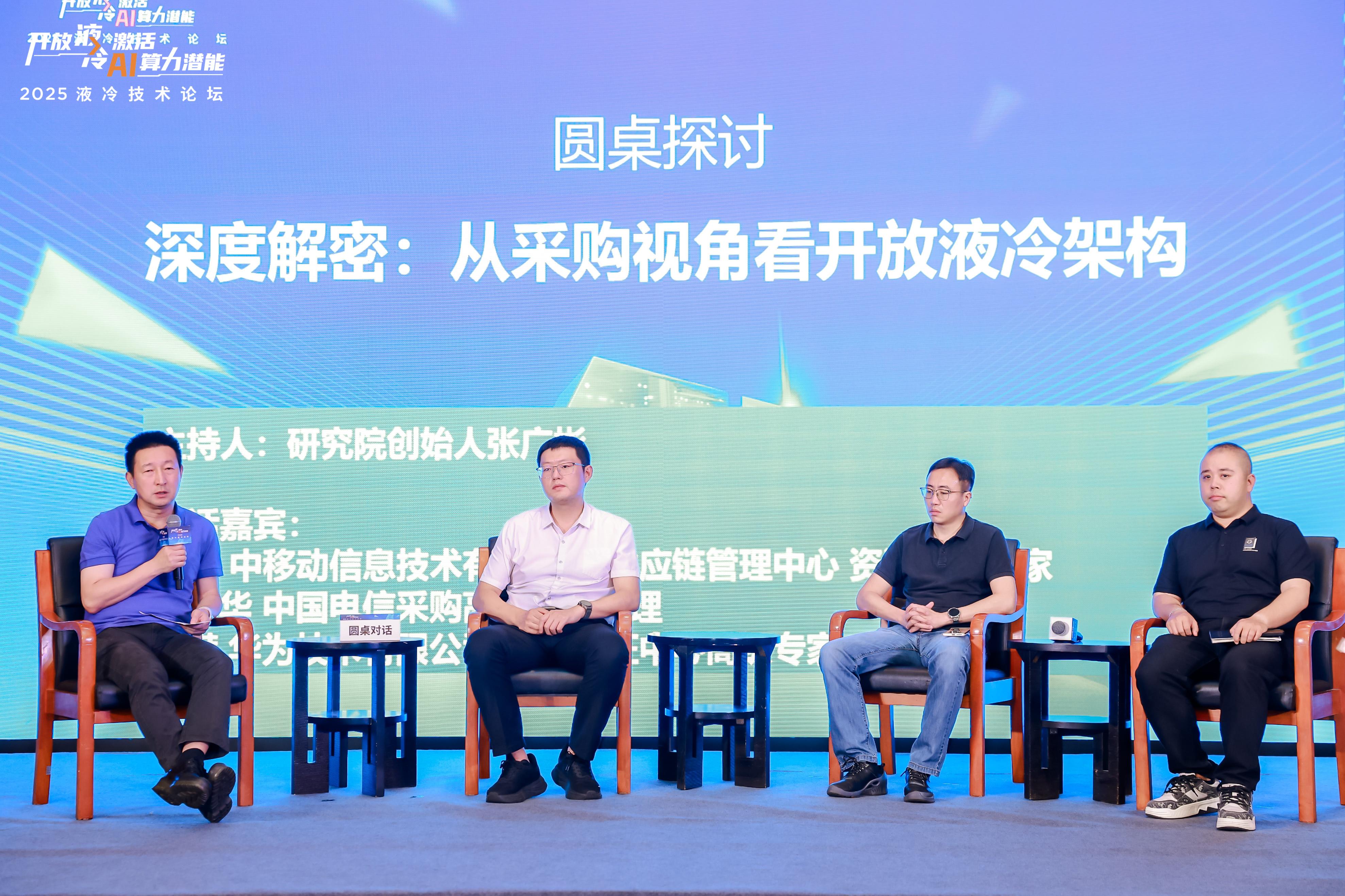
During the roundtable session, Zhang Guangbin, Co-Founder of Yiqi Research Institute, moderated a discussion with procurement experts from China Mobile, China Telecom, Huawei, and other companies on the topic of “Open Liquid Cooling Architecture from a Procurement Perspective.”
The experts noted that liquid-cooled servers still face stability challenges throughout their full lifecycle. Basic standards should be aligned from the early procurement stage through all application stages, while the standard system should be further improved based on actual user deployment scenarios to ensure a better end-user experience.
They also called for stronger research and promotion of the liquid-cooled server standards system under the framework of the Dual-Zero Initiative, as well as deeper exploration in technological innovation and product R&D, in order to support the green and efficient development of data centers.
The successful convening of this forum provided a high-level exchange platform for the integrated development of liquid cooling technologies and AI computing power. Through authoritative insights, frontier technology showcases, industry standard releases, and the launch of joint action initiatives, the forum further consolidated industry consensus, clarified technical pathways, and laid a solid foundation for the large-scale application of liquid cooling technologies and the high-quality development of the computing power industry.

 High Performance Computing Development Group(HPC DG)