On October 28, the First Plenary Meeting of the GCC Open AI Infra Community, together with the Second Plenary Meeting of the Open Liquid Cooling Committee, was successfully held at Jiangsu Plaza in Beijing. Nearly 100 member representatives and experts attended the meeting, jointly witnessing the transformation from the Open Liquid Cooling Committee to the Open AI Infra Community and the official establishment of the Open AI Infra Community.
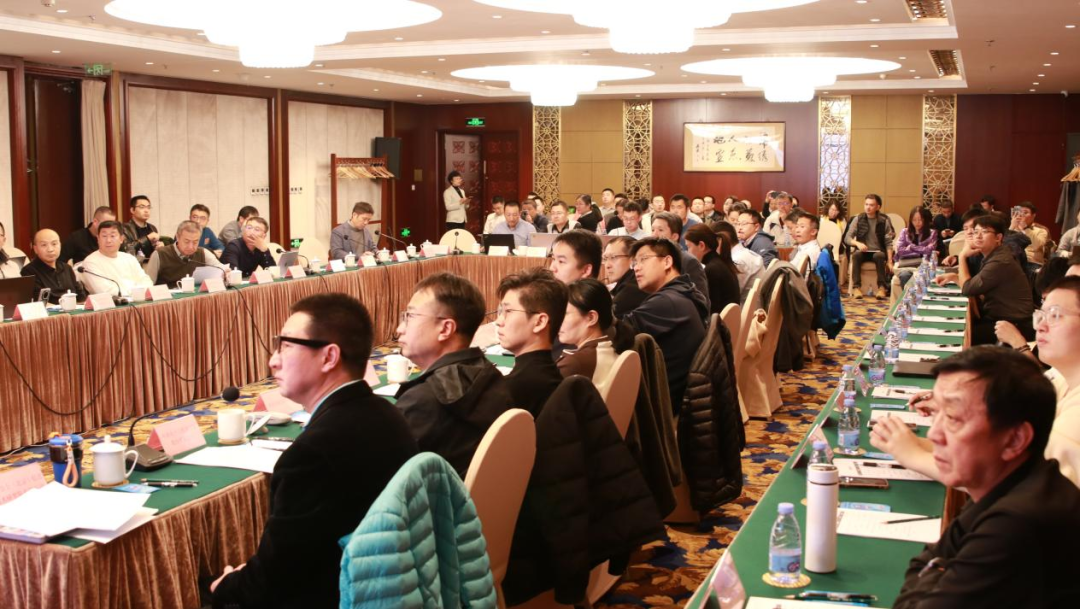
The meeting reviewed and voted on the proposal to transform the Open Liquid Cooling Committee into the Open AI Infra Community, as well as the changes to its business scope and the community’s working regulations. These decisions provide standardized guidance for the future operation of the community.
At the meeting, Jin Hai, Chair of the Global Computing Consortium, stated that since its establishment, GCC has actively promoted the development of the computing industry. With the rapid evolution of AI technologies, open source and openness have become inevitable trends. Through its community-based business proposal mechanism, GCC has taken the lead in enabling the transformation of the Open Liquid Cooling Committee. Chair Jin emphasized that the community should continue to uphold the principles of fairness and openness, focus on key technologies, build industry consensus, and support breakthroughs in AI computing infrastructure, thereby serving the development of future industries.
Zhang Chun, Chair of the Management Committee of the Open AI Infra Community, first reviewed the achievements of the committee over the past year. These included the initial establishment of a full-chain liquid cooling standards system, as well as the continued progress of the “Dual-Zero Initiative,” which focuses on compatibility challenges and has worked with testing institutions to jointly build testing platforms.
Regarding the transformation, Zhang noted that member demand, the maturity of the open-source environment, and institutional readiness had together created the conditions for the Open Liquid Cooling Committee to evolve into the Open AI Infra Community. Going forward, the Open AI Infra Community will position itself around “openness, leadership, and innovation,” focusing on open ecosystems, technological breakthroughs, and scenario reconstruction. Its business scope will also expand to full-stack intelligent computing infrastructure, with an efficient governance structure to promote coordinated industry development.
The meeting also discussed the community’s key future directions.
The rack-scale system specification will define core design elements such as rack dimensions, node layout, and a three-bus blind-mate architecture. It will clarify requirements for power supply, cooling, and high-speed interconnection, enabling high-density deployment and efficient operations and maintenance while meeting the expansion needs of AI computing power.
The AIDC infrastructure specification will focus on pain points in the planning and construction of AI data centers. It will define technical parameters and standards across power supply and distribution, liquid cooling, building layout, and other areas, while unifying specifications for CDU, secondary piping, and related systems. These efforts aim to ensure the efficiency and reliability of high-density computing deployment.
The computing performance benchmark work will focus on building an evaluation system suitable for diverse computing scenarios. It includes tools such as CPUBench for single-server computing power, ClusterBench for cluster performance, and AISBench for AI servers. By defining layered indicators and testing modes, the benchmark system aims to address the limitations of traditional benchmarks and support product optimization, procurement, and technology selection.
Wang Zhiqiang, Member of the Management Committee of the Open AI Infra Community, stated that the community will promote the continuous evolution from standards to specifications, making specifications a bridge between technology and value. He also sincerely invited partners across the value chain to join the ongoing development of the AIDC construction specification and participate in project group collaboration, jointly defining the future of AI infrastructure through open co-creation.
Professor Fan Chun, Member of the Advisory Committee of the Open AI Infra Community, stated that openness and innovation are the soul of the community. In the development of specifications and standards, the community will promote compatibility design across frameworks and platforms, connect computing facilities with data center infrastructure, and lower the threshold for innovation.
At the same time, by working with universities and other academic institutions through an open community model, the community will help cultivate the next generation of leaders in AI infrastructure. The Advisory Committee will build a collaborative platform connecting industry, academia, research, and application, guiding the industrial chain from proprietary development toward co-creation and delivering systematic value thinking with comprehensive industrial and ecosystem impact for the computing ecosystem.
During the same period, the community also held its first Management Committee meeting and Technical Steering Committee meeting. The conclusions of these meetings were released at the plenary session. The community announced the list of Management Committee members representing core user enterprises, the list of Advisory Committee members, the list of Technical Steering Committee members, and the appointment of the Community Secretary-General.
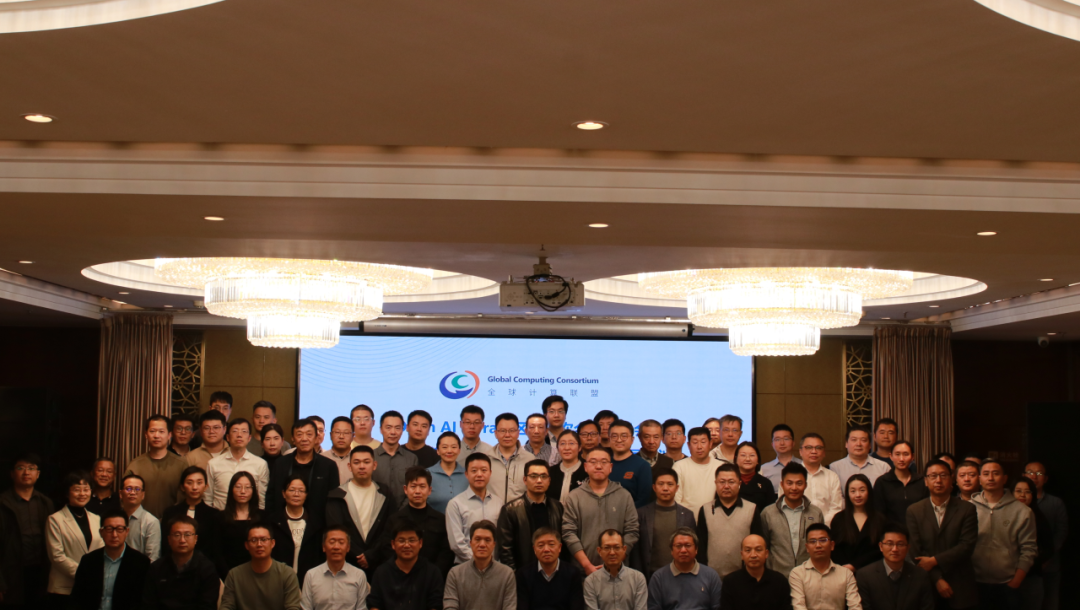
The Technical Steering Committee announced the establishment of project groups, including four major project groups such as AI rack-scale systems and data center infrastructure. It also released the list of member representatives serving as project group directors and group leaders.
In terms of project advancement, the community launched multiple projects, including the GCC Liquid-Cooled Rack-Scale System Interface Specification and the AIDC Infrastructure Specification, laying a solid foundation for the standardization and large-scale implementation of AIDC infrastructure.

 High Performance Computing Development Group(HPC DG)