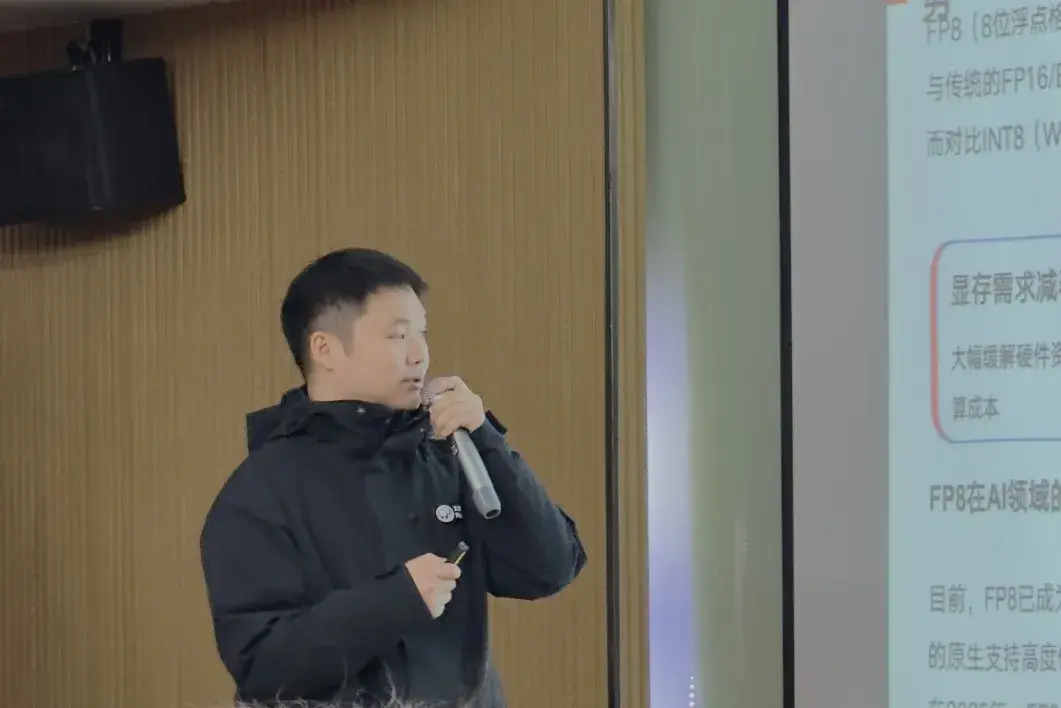
On January 20, 2026, the Intelligent Computing Industry Development Committee of the Global Computing Consortium (GCC) successfully held a seminar on low-precision AI computing in Hangzhou.
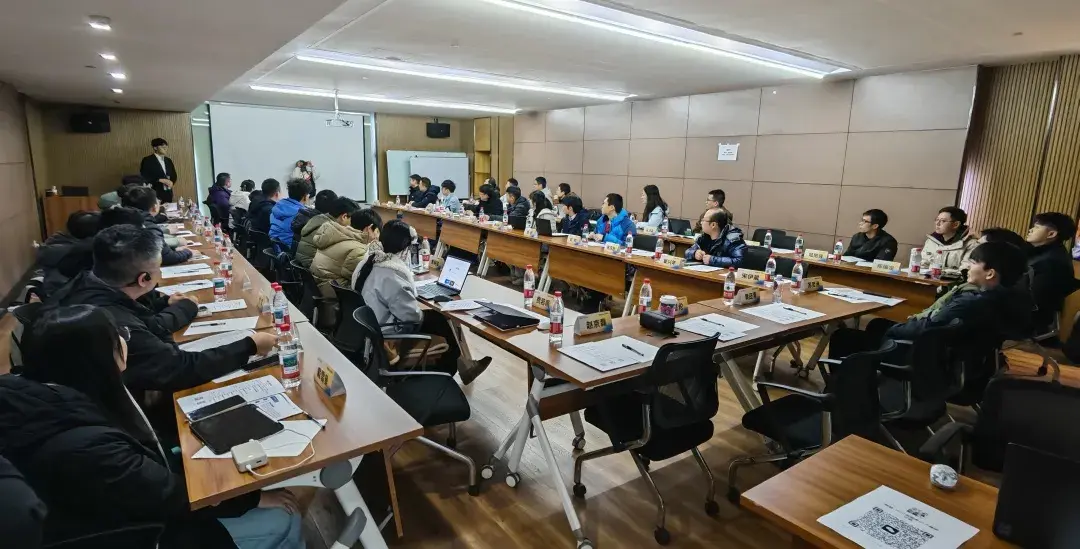
The event took place during Dahan, or “Major Cold,” one of the traditional Chinese solar terms, and coincided with the first snowfall in Hangzhou this winter. Yet the cold weather did not slow the industry’s pursuit of advanced AI computing technologies. More than 50 professional representatives from over 30 organizations across China attended the seminar.
Participants engaged in active discussions on the productization, engineering practices, and standardization of low-precision data formats, jointly promoting the transition of related technologies from research to validation, and from pilot exploration to real-world deployment.
The seminar was hosted by the Global Computing Consortium, organized by the Hangzhou Artificial Intelligence Computing Center, the Hangzhou Association of Artificial Intelligence, and the Management Committee of Hangzhou Grand Canal Digital Intelligence Future City, and co-organized by Hangzhou Tiankuan Technology Co., Ltd., Huawei Technologies Co., Ltd., Zhejiang Ascend Ecosystem Innovation Center, and the National Intelligent Computing Standardization Working Group.
Focusing on Low Precision: Making Large Models More Efficient, Faster, and Easier to Deploy
As large models continue to scale, their requirements for computing power and energy consumption in both training and inference keep rising. Low-precision computing has therefore become an important pathway toward more efficient intelligent computing.
In simple terms, low-precision computing means using fewer digital bits to represent and process data, while minimizing the impact on model performance. This approach can significantly reduce resource consumption and improve computing efficiency.
From Methods to Practices and Standards
Sun Mou, Research Expert at Zhijiang Lab, shared the lab’s exploration and practical results in moving MoE model training from “mixed precision” toward “low precision.” Through native low-precision training, the team achieved significant improvements in TGS and memory savings, while maintaining only minimal precision loss compared with BF16.

Tang Jinlong, Senior AI Operator Engineer at Henan Kunlun Technology Co., Ltd., introduced the implementation of software-based floating-point FP8/FP4 on the domestic Ascend platform. This approach reduces dependency on hardware while achieving major improvements in bandwidth and dequantization performance, offering a successful new case for supporting low-precision computing on domestic computing platforms.
Zhou Mingyao, Vice President of Zhongke Jiahe (Hangzhou) Co., Ltd., analyzed the demand for low-precision computing from the perspective of project implementation and product application. He first reviewed the current supply landscape of major low-precision computing technologies in the industry, then shared his views on future application trends, and introduced Zhongke Jiahe’s practices in delivering low-precision model products.
Li Jianpeng, Technical Expert at Huawei Technologies Co., Ltd., introduced the design principles of the HiF8 low-precision data format. HiF8 meets the computing needs of different scenarios through an adaptive variable dynamic range and variable numerical precision. Validation on mainstream open-source LLM and MoE models shows that HiF8 delivers better model convergence stability and precision usability than existing data formats.
Pang Ting, a member of the GCC HiF8 standard drafting group and Computing Standards Lead at Huawei, together with Xiong Hua, Executive Secretary-General of the GCC Intelligent Computing Industry Development Committee, reported on the work plans for the HiF8 Data Format Technical Specification group standard and the Low-Precision AI Computing White Paper.
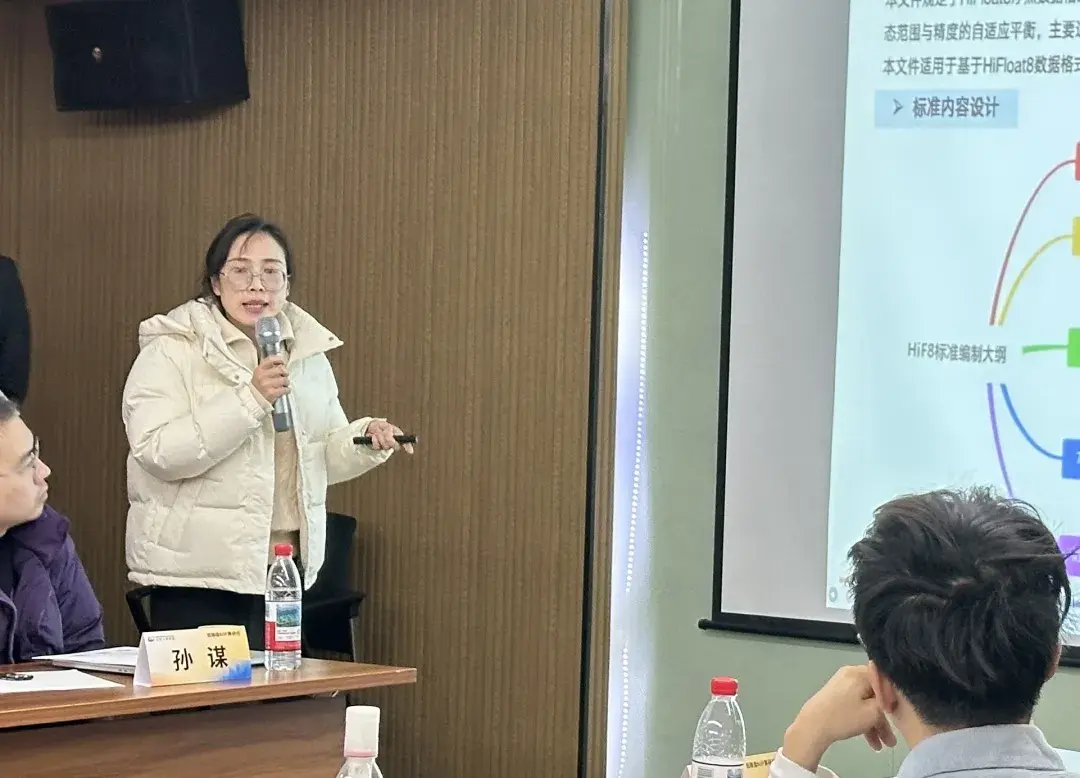
The HiF8 group standard is currently being drafted and reviewed with the participation of organizations from across the value chain, including chip companies, server and infrastructure providers, model and application vendors, research institutions, and universities. The standard is planned for release in the first quarter of this year, and relevant organizations are welcome to join and support the drafting process.
Active Discussion: Co-Creation Across Industry, Academia, Research, and Application
The seminar brought together more than 50 representatives from over 30 organizations, covering multiple parts of the value chain, including research, products, and end users. Participants from chip, software, and other industries joined in-depth discussions on feasible paths and cooperation opportunities for applying low-precision data formats and computing technologies in real-world scenarios.
Next Steps: Advancing Standards and Pilot Validation in Parallel
Looking ahead to future standardization and industry co-creation work, the GCC Intelligent Computing Industry Development Committee will continue to advance the drafting of the HiF8 group standard as planned. It will also organize case collection and application co-creation activities for various low-precision data formats, targeting models, industry users, and other stakeholders, in order to build reusable and scalable deployment experience.
The GCC Intelligent Computing Industry Development Committee welcomes partners from across the industry to join in promoting broader understanding and practical adoption of low-precision computing.
Contact
For more information, please contact Xiong Hua, Executive Secretary-General of the GCC Intelligent Computing Industry Development Committee.
Email: xionghua@gccorg.com

 High Performance Computing Development Group(HPC DG)