Experts from telecom operators, server vendors, chip companies, infrastructure software providers, and service operators gathered to discuss topics including standards, mixed training and inference, CPU+XPU integration, software foundations, scheduling, and operational management.
Dr. Sun Mengyu, Research Expert at China Telecom Research Institute, noted that as large models and AI agents develop rapidly, computing power will remain in short supply for a long time. Therefore, while continuing to build new computing capacity, it is equally important to fully activate existing heterogeneous computing resources.
China Telecom’s approach is to build a system based on “unified computing, unified communication, unified scheduling, and unified evaluation,” and to introduce solutions for four-chip mixed training and heterogeneous inference. After interconnecting four types of heterogeneous chips, the cross-chip network performance increased by 30%, heterogeneous communication efficiency exceeded 98%, and training efficiency reached around 95% of that of a homogeneous cluster.
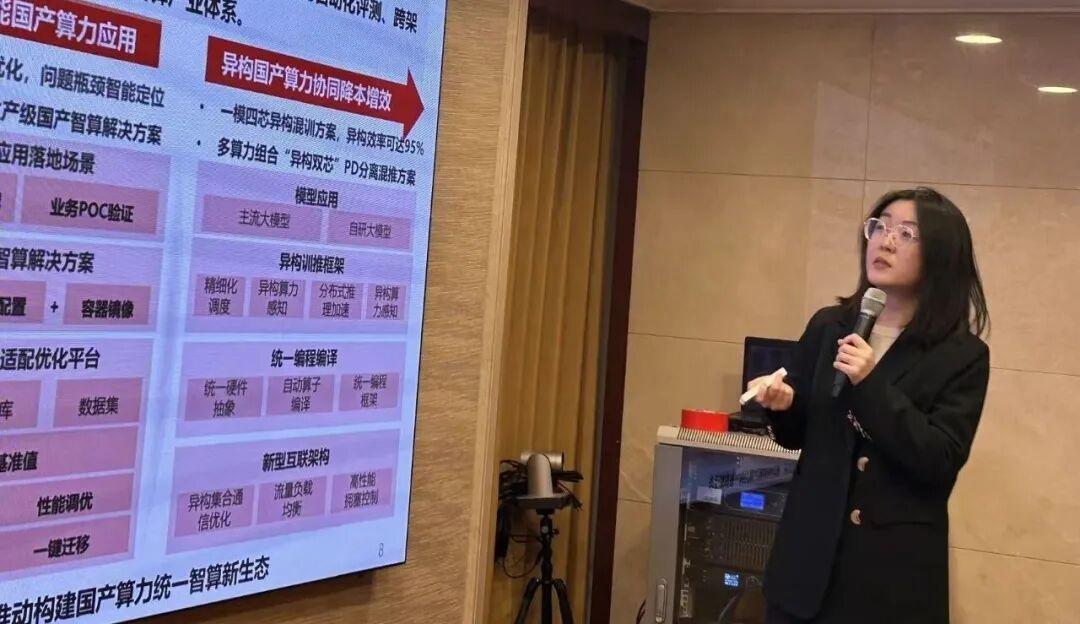
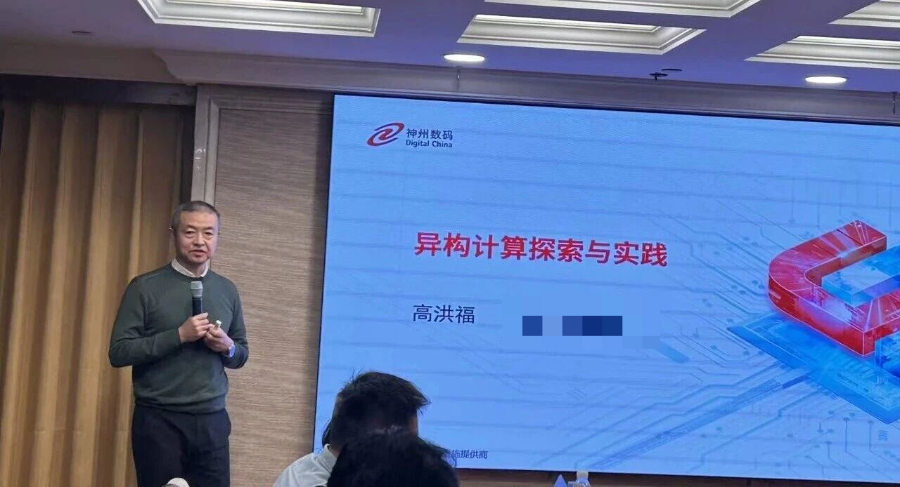
Mr. Gao Hongfu, Head of Ecosystem Solutions for Information Technology Application Innovation at Shenzhou Kuntai, shared the implementation challenges of heterogeneous computing from the server system perspective.
Positioned as a provider of innovative intelligent computing infrastructure, Shenzhou Kuntai has developed the KunTai R624 K2 large-model training and inference integrated server based on the Kunpeng platform. The server supports up to 10 AI accelerator cards and is compatible with multiple mainstream AI accelerator cards and frameworks, addressing customers’ practical demand for flexible card configuration and on-demand expansion.
Mr. Gao also pointed out that the real challenge of heterogeneity is not simply installing different cards into the same machine. Rather, the difficulty lies in the combined complexity and uncertainty brought by hardware openness, software open-source readiness, and ecosystem compatibility. Therefore, interconnection standards, software abstraction, and ecosystem collaboration must be advanced in parallel.
Mr. Wang Hairui, Expert Project Manager at Shanghai Iluvatar CoreX Semiconductor Co., Ltd., focused on the company’s practices in mixed training and mixed inference. According to him, the efficiency of heterogeneous clusters has been improved to 97.5%. By assigning different stages of large-model inference to the hardware best suited to each stage, the company has achieved higher throughput and better cost performance.

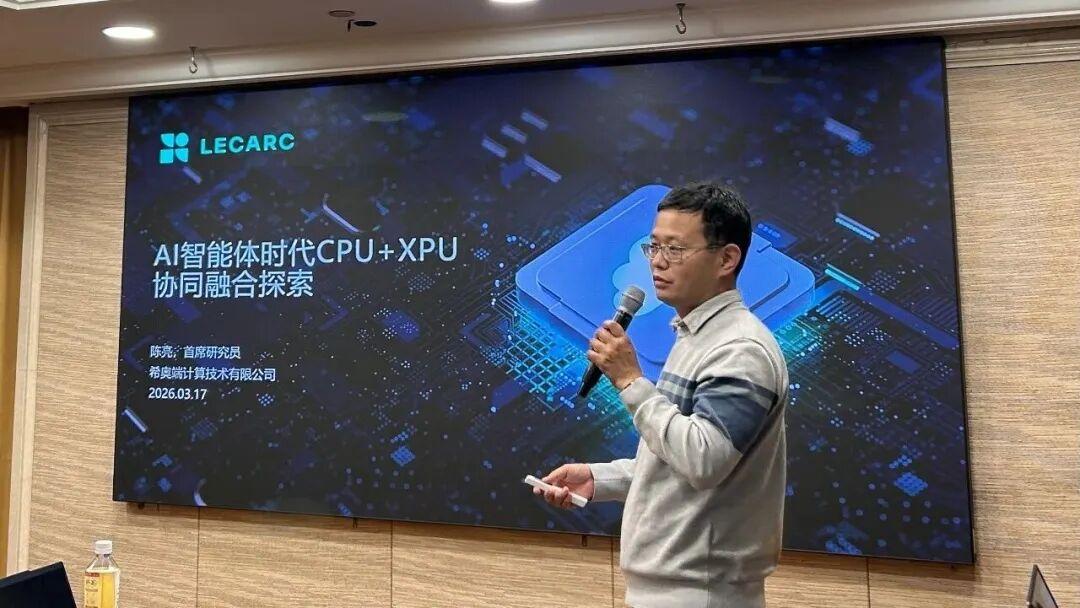
Dr. Chen Liang, Chief Researcher at CIX Technology (Shenzhen) Co., Ltd., examined how CPU and XPU roles should be redefined in the era of AI agents.
As a company focused on ARM server CPUs, CIX provides solutions that combine general-purpose computing and intelligent computing for enterprise and edge computing scenarios. Dr. Chen argued that in the agent era, CPUs are no longer merely supporting components. Many tasks, including workflow orchestration, tool invocation, data movement, and system control, still rely heavily on CPUs. As a result, CPU and XPU must move from working separately to deeper collaboration and integration. Interconnection, unified memory, and data security will become key thresholds in this new stage.
Mr. Zang Lu, Research Expert at Beijing Zhongke Jiahe Intelligent Technology Co., Ltd., placed the focus on the “software foundation.” Zhongke Jiahe believes that AI infrastructure software serves as the soft foundation connecting upper-layer applications with underlying computing resources. It not only determines the performance ceiling of large-model training and inference, but also determines whether multiple types of hardware can truly be used smoothly.
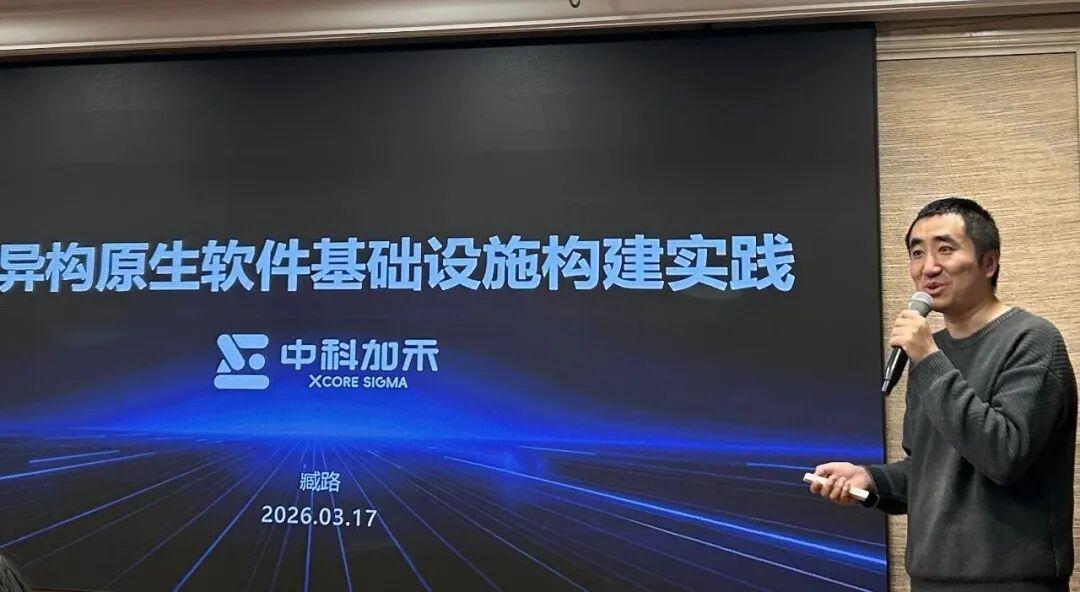
Facing challenges such as hardware diversity, programming complexity, and high system coordination costs, Mr. Zang proposed a compiler-driven approach. Through the SigInfer inference engine and AI for Compiler technologies, the company aims to automate as much as possible the adaptation and optimization processes that previously relied heavily on manual expertise, helping heterogeneous computing evolve from “being able to run” to becoming stable, efficient, and reproducible.
Dr. He Wanqing, VP of Technology Ecosystem at Beijing Qingcheng Jizhi Technology Co., Ltd., emphasized the value of open source and the agent software stack. Dr. He introduced that Qingcheng Jizhi is building an integrated solution for heterogeneous computing and hopes to deliver an experience based on domestic chips that is comparable to international mainstream solutions.
In his view, heterogeneous collaboration cannot rely solely on hardware aggregation. It also requires open-source ecosystems, intelligent routing, automatic optimization, and secure sandboxes to truly refine the system. In particular, as AI agents continue to rise, software will increasingly function like a “central control room” that can schedule resources intelligently, shielding users from the complexity of underlying system capabilities.
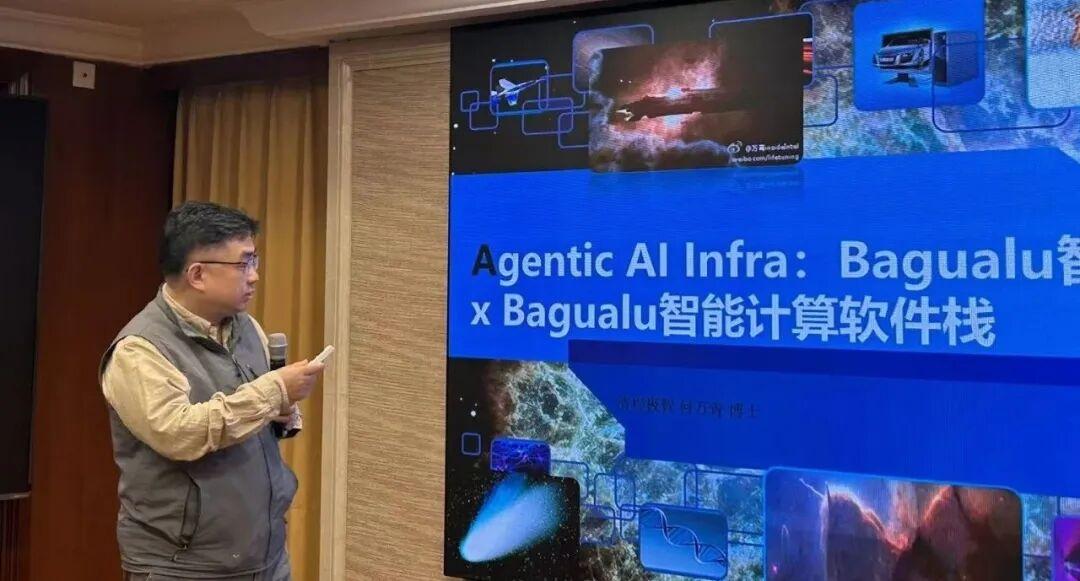
Ms. Wang Ruobing, Product Manager at Hangzhou Tiankuan Technology Co., Ltd., offered another perspective from the angle of service operations. As a leading digital and intelligent service operator in China, Tiankuan provides capabilities including data governance, model development, and performance tuning.
She noted that the customers most urgently in need of heterogeneous scheduling platforms usually fall into three categories: state-owned enterprises and large industry customers that do not want to be locked into a single vendor; universities and research institutions with multiple types of equipment and research groups; and urban computing power centers that need to serve multiple customers and business scenarios. Tiankuan’s core focus is to manage multi-vendor computing resources through a unified platform and enable users to access them seamlessly.
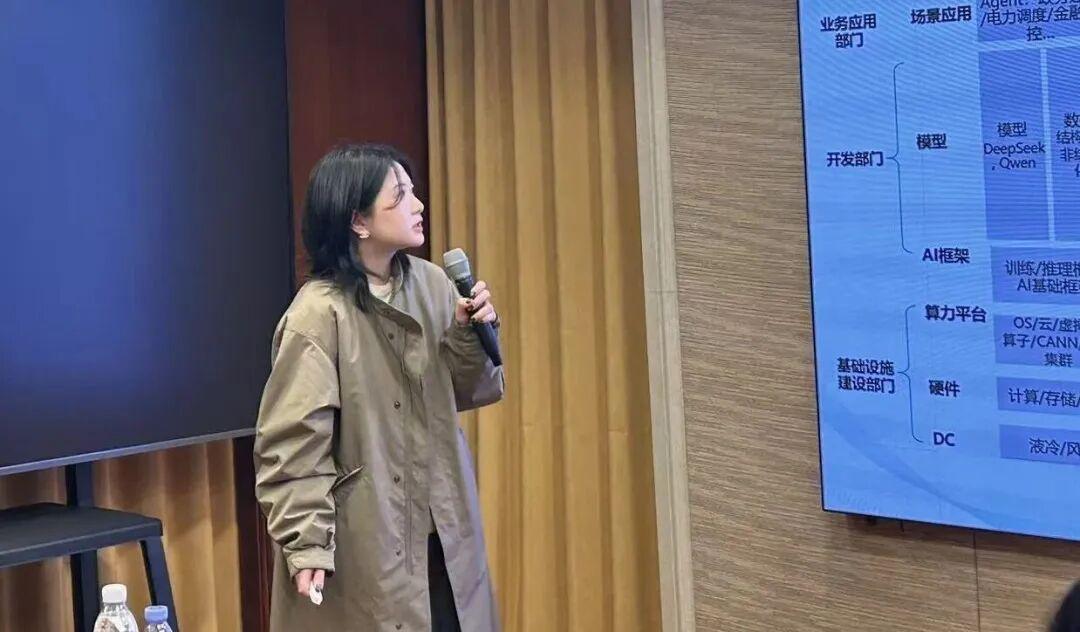
During the open discussion session, the conversation turned to the question of what the industry should address first. Miao Fuyou, CTO of the GCC Secretariat and the seminar moderator, raised a clear central question: why heterogeneous computing collaboration must be pursued, and where the most critical bottlenecks currently lie.
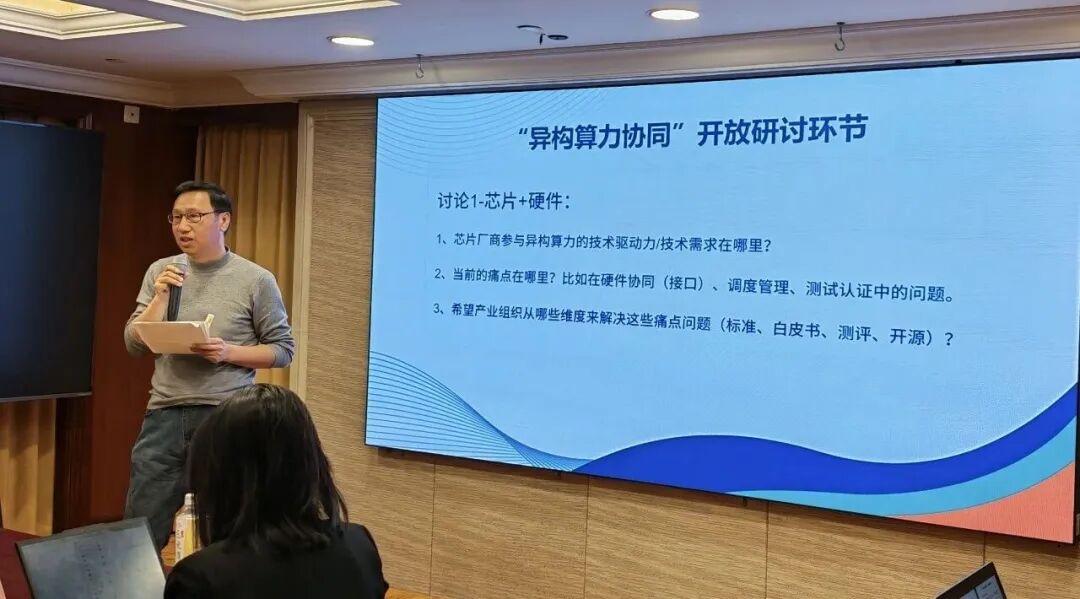
Participants generally agreed that the fundamental drivers of heterogeneous collaboration come from two sides. On the one hand, large models, inference, and AI agent applications continue to push up demand for computing power. On the other hand, customers are already purchasing increasingly diverse chips, servers, and software stacks, making it essential to use existing resources more efficiently.
Regarding chips and hardware, the discussion focused on how to connect interfaces, coordinate devices, and evaluate capabilities. Several speakers mentioned that the most practical challenge in heterogeneous computing today is not only the performance gap among different hardware, but also the lack of unified interfaces, inconsistent interconnection methods, and differing testing and certification criteria across chips. These issues significantly increase the cost and risk for users when selecting, deploying, and expanding systems.
A consensus emerged that the next step should be to advance interface standards, interconnection specifications, testing and certification, and software-hardware collaboration in parallel, gradually establishing a more unified, comparable, and verifiable framework for evaluating and coordinating heterogeneous computing.
The discussion around system software and applications went further into whether heterogeneous computing resources can truly be scheduled, managed, and used effectively. Participants broke the issue down into several layers: the current progress of basic scheduling and cross-vendor task scheduling; the major obstacles in compilation, inference frameworks, model deployment, and application layers; and how vendor-owned solutions and emerging open-source solutions should collaborate when mainstream open-source systems remain incomplete.
At the industry ecosystem level, the discussion expanded to how the industry can form stronger collective momentum. Some participants pointed out that many requirements across applications, systems, and chips have not yet been clearly articulated. As a result, upstream players may not fully understand what downstream users truly need, while downstream users may find it difficult to assess the boundaries and costs of different technical routes. Data processing, security mechanisms, confidential computing, application implementation, and cost models should therefore be considered within the same industry framework.
Looking at the seminar as a whole, although the participating companies came from different parts of the value chain, their conclusions were highly aligned: heterogeneous computing collaboration is no longer a frontier concept, but a practical engineering requirement for bringing AI into large-scale application.
Upstream chip companies are pursuing higher-quality computing power. Midstream server and infrastructure software providers are solving issues of compatibility, adaptation, and efficiency. Downstream platforms and service providers are answering the more practical question of how customers can truly use these capabilities and obtain real value from them.
The seminar also reached a consensus that follow-up work will continue under the GCC Intelligent Computing Industry Development Committee. GCC will further advance the establishment of a Heterogeneous Computing Collaboration Working Group, focusing on standards development, white paper publication, evaluation and validation, and the collection of benchmark cases. The goal is to move this discussion from sharing ideas to delivering concrete outcomes.
Welcome to join the GCC Intelligent Computing Industry Development Committee.
Contact:
Ms. Gui Zelin
guizelin@gccorg.com

 High Performance Computing Development Group(HPC DG)