From September 18 to 20, Huawei Connect 2025 was grandly held in Shanghai. As an important annual event in the field of global technology and industrial intelligence, this year’s conference was themed “Accelerating Industry Intelligence,” bringing together leading global enterprises, technology leaders, and industry experts to jointly explore new paths for digital transformation.
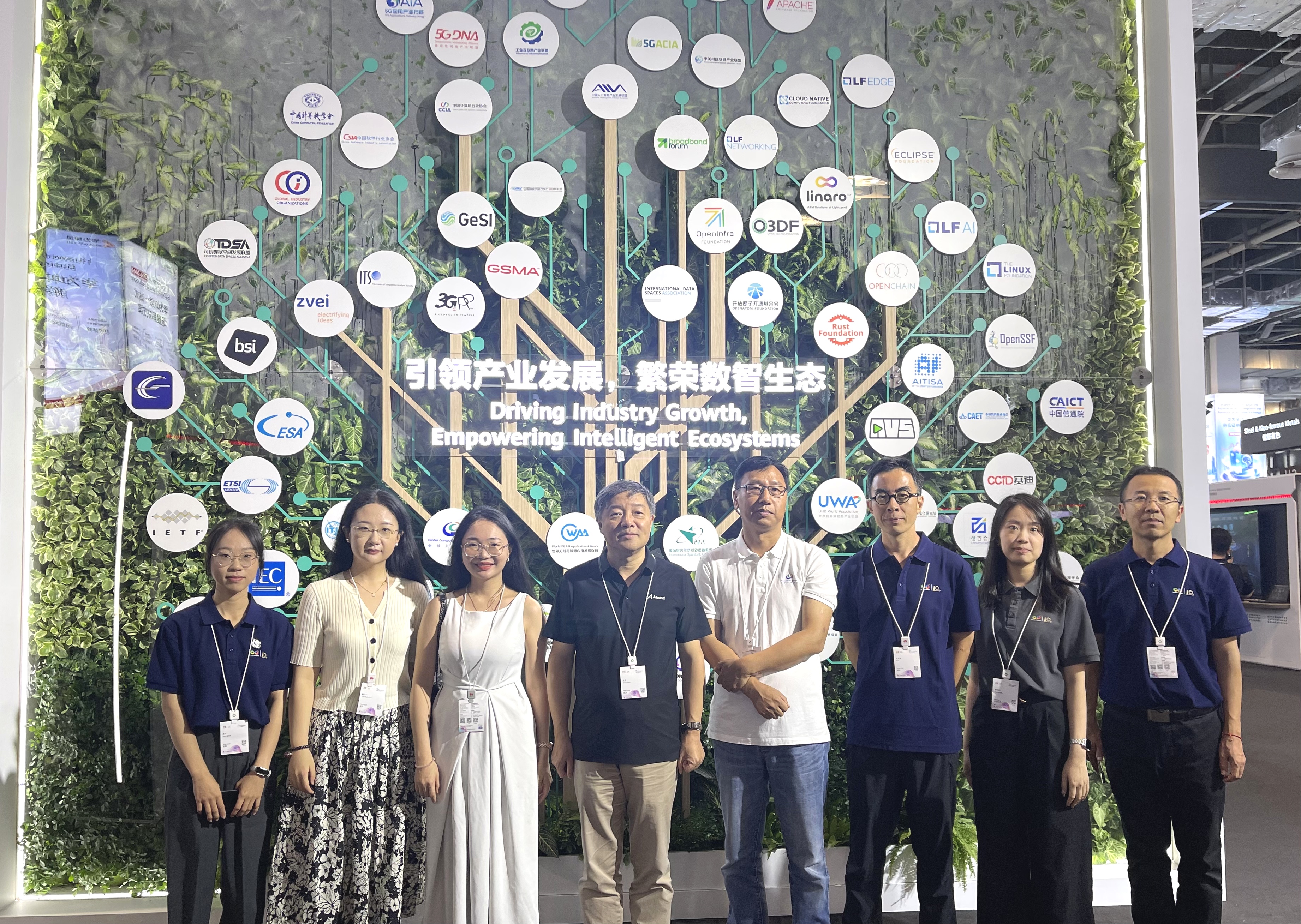
As an important industry ecosystem alliance partner of Huawei in the computing field, the Global Computing Consortium (GCC) was invited to participate in the exhibition. Focusing on the three core directions of “new standards, new architectures, and new ecosystems,” GCC comprehensively showcased its standards achievements, architecture practices, and ecosystem collaboration value in the field of computing infrastructure. Taking this cooperation as an example, GCC also sent a signal of open collaboration to its global members — looking forward to joining more members in participating in industry ecosystem activities and jointly promoting the prosperity of the global computing industry ecosystem.
Invited Exhibition: Multi-Field Collaboration, Setting a Model for Coordinated Industrial Development
As a GCC Vice Chair unit and Platinum Member, Huawei’s invitation for GCC to appear at Huawei Connect reflects the deep collaboration between the two parties. The GCC exhibition area was located in the “Industry Organization Exhibition Island.” Following the ecosystem enablement path of “standards as the foundation and scenario implementation,” the exhibition area set up three major display points around “new standards, new architectures, and new ecosystems,” systematically presenting GCC’s core business and industrial value.
Multiple achievements displayed on site came from GCC’s standards development and ecosystem aggregation in key fields, allowing participants to directly experience GCC’s core role as a hub in promoting computing industry standardization, architecture innovation, and ecosystem integration.
Achievement Showcase: Dual Focus on Technological Breakthroughs and Scenario Implementation
At this year’s Huawei Connect exhibition, GCC focused on its three core businesses of “new architectures, new standards, and new ecosystems.” Through technical solutions, physical demos, and case interpretation, GCC presented its collaborative innovation achievements with ecosystem partners including Huawei, turning “Accelerating Industry Intelligence” from a concept into tangible practice.
1. New Architectures: Leading the Transformation of Computing Paradigms
In response to the industrial demand for moving “from CPU-centric computing to diversified and equal computing,” GCC has built a distributed fully peer-to-peer interconnection framework based on high-speed network protocols. It defines the collaborative scheduling requirements for CPU pools, memory pools, storage pools, and XPU pools, meeting the high-concurrency and low-latency needs of scenarios such as AI supercomputing and big data processing. This promotes industry consensus on diversified and equal computing architectures and releases the vitality of new computing.
During Huawei Connect, GCC jointly released the Supernode Development Report with Huawei and other industry partners, further refining the technical parameters and industry application scenarios of supernode architectures and providing a clear direction for the large-scale upgrading of computing infrastructure.
2. New Standards: Building a Solid Technical Foundation for Industrial Development
Around next-generation computing infrastructure, GCC has worked with Huawei and other leading enterprises to promote the implementation of multiple key standards.
In the field of liquid cooling, the GCC Open Liquid Cooling Special Interest Group launched the “Dual-Zero Initiative” for liquid-cooled data center deployment with “zero issues and zero waiting.” The initiative has attracted more than 60 companies across the industry chain and released two batches of qualified component whitelists.
At the same time, the exhibition area presented an intuitive comparison between liquid-cooled rack-scale servers and air-to-liquid retrofitted rack servers, fully highlighting the core advantages of native liquid cooling solutions in operations and maintenance efficiency, computing density, energy saving, and consumption reduction. This set an industry benchmark for the green and high-density development of intelligent computing centers.
In addition, in the field of AI data formats, Huawei and other member organizations launched related standards projects on the HiF8 low-precision floating-point data format within GCC, providing standards support for improving AI computing efficiency.
3. New Ecosystems: Scenario-Based Innovation Activates Industry Value
Under the theme of Huawei Connect 2025, “Accelerating Industry Intelligence,” intelligence is no longer an abstract concept, but is embodied in practical results across industries. Embodied intelligent robots are one of the most direct examples.
As a key landing point for empowering the intelligent transformation of industries, the Shenyang Institute of Automation of the Chinese Academy of Sciences, a core member of the GCC Edge Computing Development Group, presented the “workstation-level embodied control system” embodied intelligent robot, which attracted strong attention in the exhibition area.
The system is equipped with a software-hardware integrated solution adapted to the GCC ecosystem, featuring the “industrial all-in-one machine EIC-M1 + operating system EOS.” It addresses the pain points of traditional industrial robots, including weak scenario generalization, difficulty in human-machine collaboration, and slow process iteration, enabling an “out-of-the-box” upgrade. Its striking appearance and advanced technological core made it a highlight of the exhibition area.
At the exhibition site, it attracted attention and active interaction from both domestic and international partners.
Open Invitation: Welcoming Global Members to Jointly Hold Industry Activities
GCC’s appearance at Huawei Connect was a successful practice of joint exhibition between the alliance and its member organization. Through the platform of its member partner, GCC not only fully displayed the achievements of ecosystem aggregation, but also helped the member organization efficiently connect with global industrial resources and amplify the industrial influence of its technologies and products, providing a vivid example of the “member + alliance” collaboration model.
In the future, GCC will continue to uphold the vision of “new computing empowering the digital and intelligent society,” deepen collaboration with global members, and look forward to working with every member partner to move in step with new opportunities in the computing industry and jointly draw a better blueprint for the digital and intelligent society.

 High Performance Computing Development Group(HPC DG)