On July 3, the "SuperPod and GW-Class AIDC Technology Forum and Open AI Infra Community Mid-Year Working Meeting," guided by the Global Computing Consortium (GCC) and hosted by the GCC-Open AI Infra Community (OAII), was successfully held. The event focused on key AI infrastructure technologies including SuperPods, GW-class AI data centers (AIDCs), liquid cooling, DC 800V power supply and distribution, and high-speed interconnect. The event released five technical specifications and two research reports, officially launched the OPEN NPO project, and held an appointment ceremony for community project managers — further improving the AI infrastructure standards system and open collaboration innovation mechanism, and injecting new momentum into high-quality industry development.
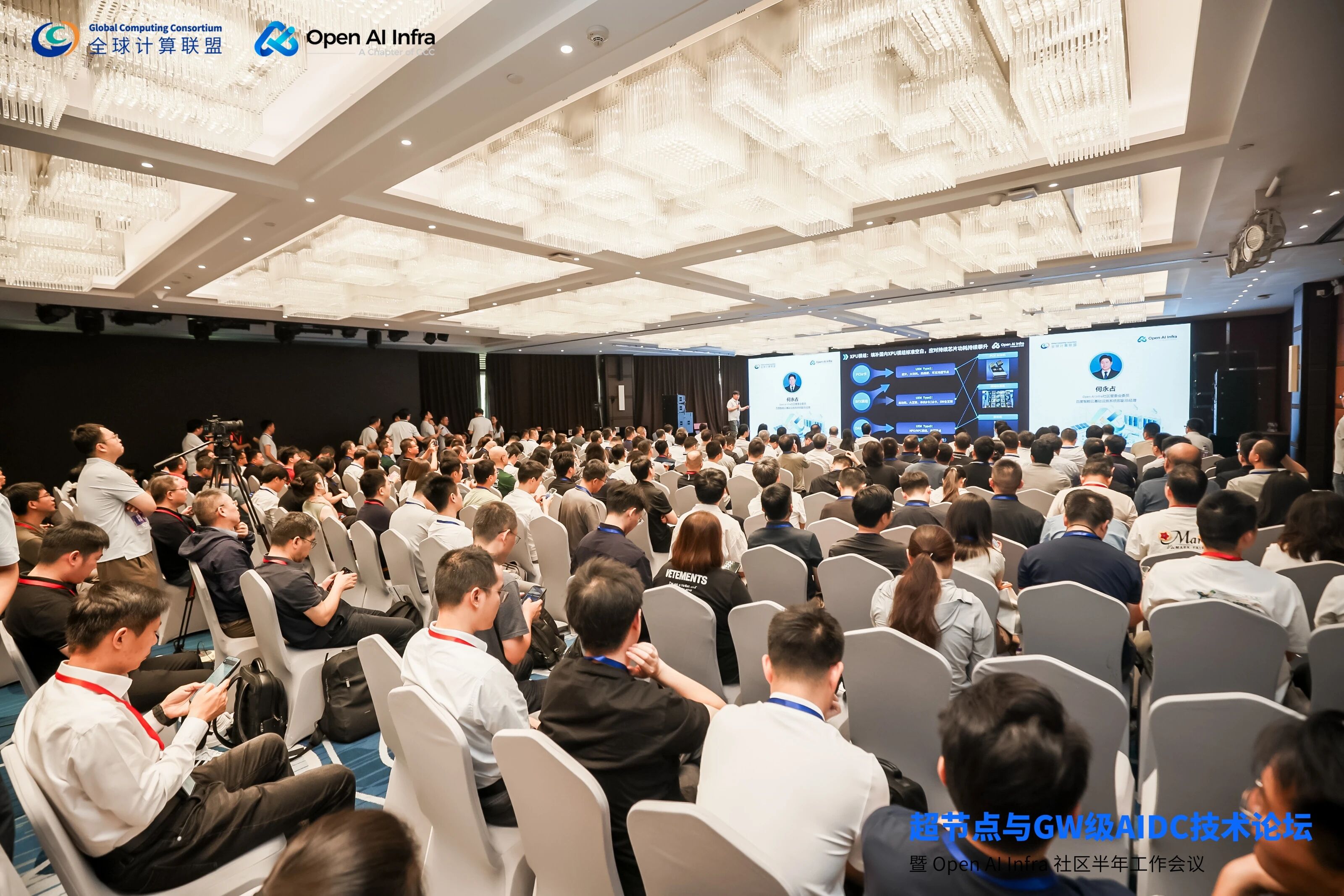
[Image: Event banner: Global Computing Consortium / Open AI Infra — SuperPod and GW-Class AIDC Technology Forum and Open AI Infra Community Mid-Year Working Meeting.]
As large models continue to evolve, demand for AI computing power is growing rapidly, and SuperPods and GW-class AI data centers are becoming an important direction for industry development. Around key AI infrastructure technologies, the Open AI Infra Community continues to bring together premium resources across the industry chain — joining forces with internet enterprises, telecom operators, equipment vendors, data centers, and research institutions — to advance standards development, technology research, and ecosystem collaboration, and to accelerate the construction of an open and coordinated AI infrastructure innovation system.
Release of Five Technical Specifications to Further Improve the AI Infrastructure Standards System
At the event, the Open AI Infra Community officially released five technical specifications: GCC Liquid-Cooled Rack Interface Specification (V1.0), GCC Liquid-Cooled Rack System Architecture Design Specification – Type A (V1.0), AIDC Infrastructure Specification (V1.0), Key Specifications and Evolution Roadmap for CDU (V1.0), and High-Density Micro-Module Power Distribution System Design, Evolution, and Deployment Specification (V0.8) — further strengthening the AI infrastructure standards system.
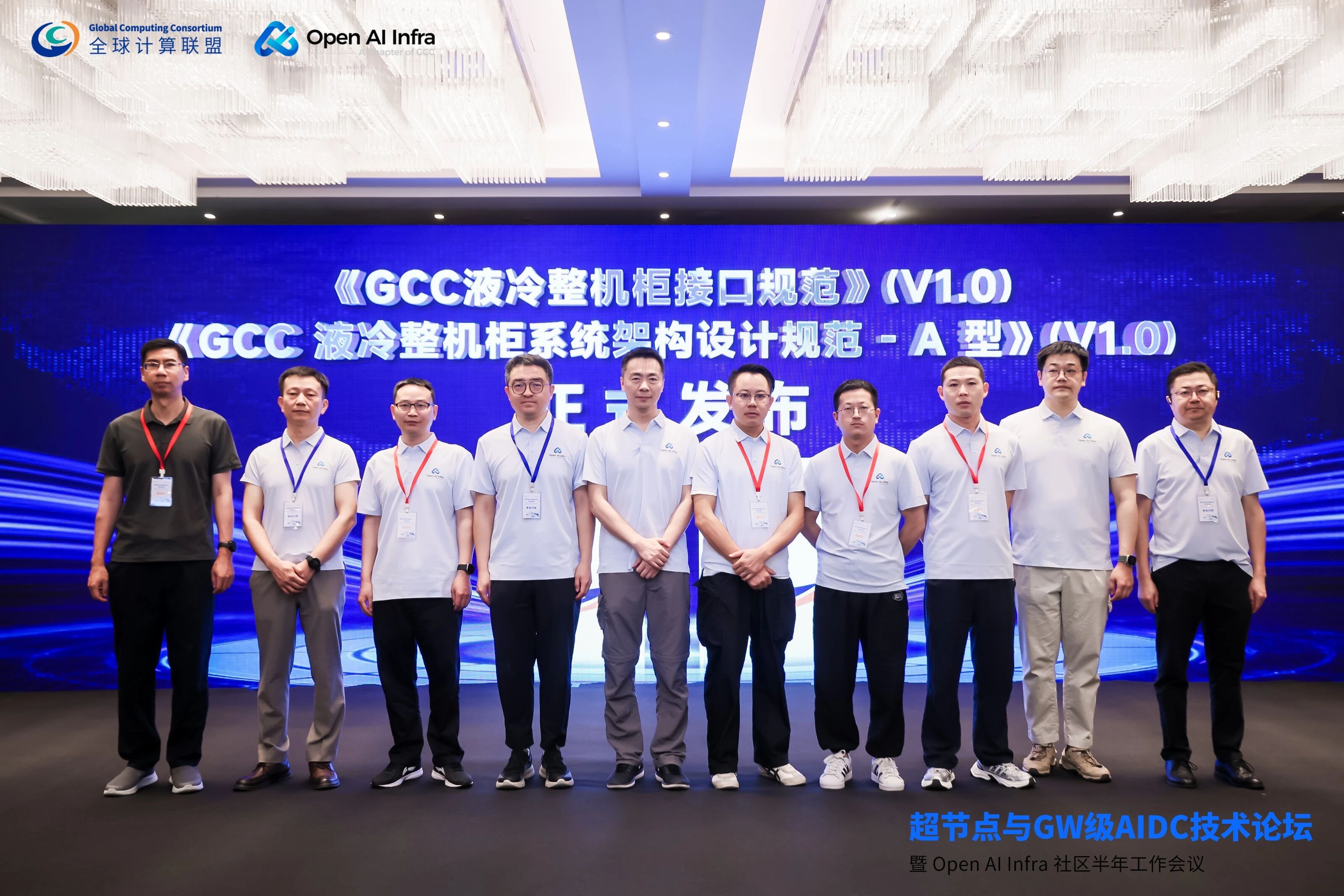
[Image: Release slide: GCC Liquid-Cooled Rack Interface Specification (V1.0) and GCC Liquid-Cooled Rack System Architecture Design Specification – Type A (V1.0).]
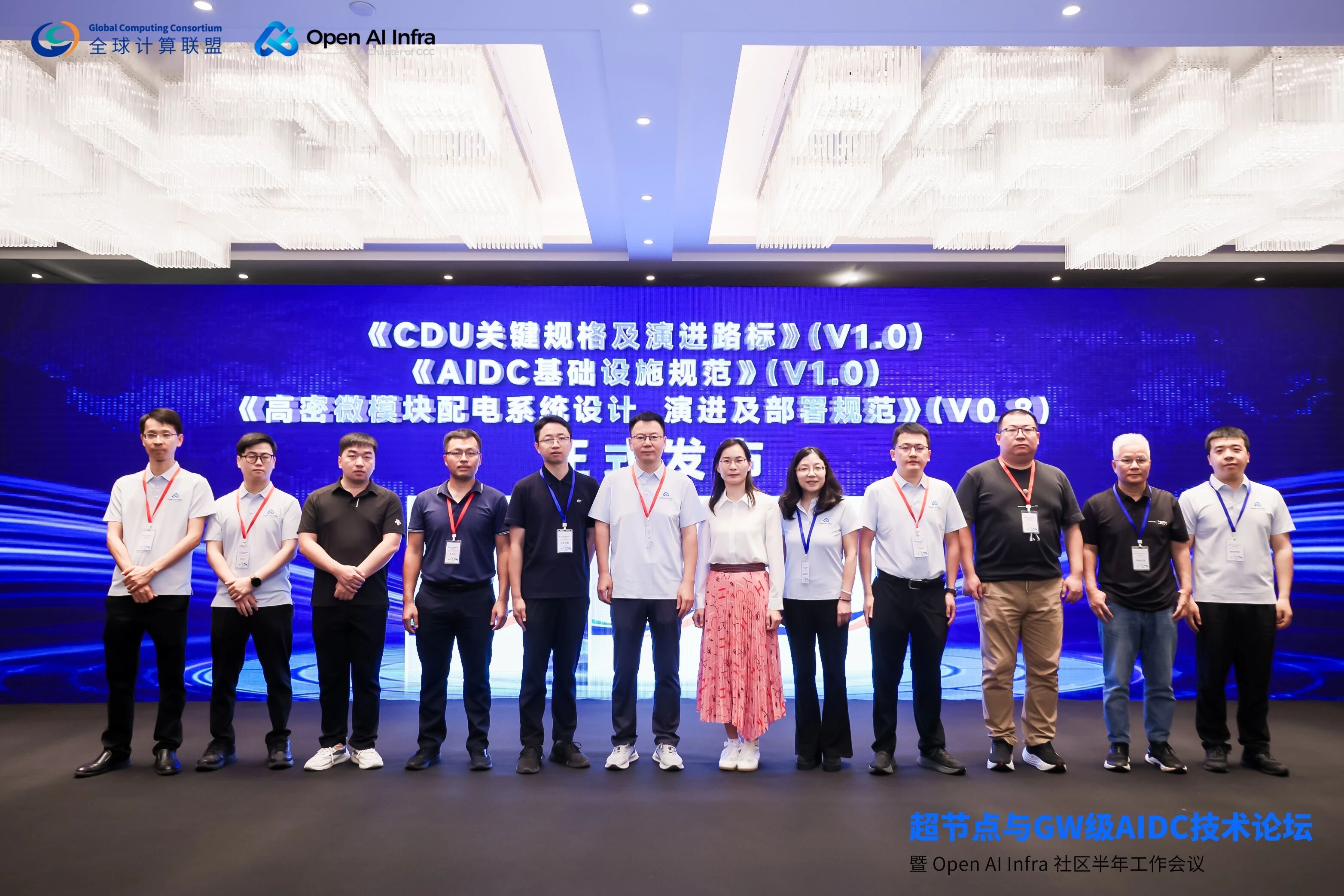
[Image: Release slide: Key Specifications and Evolution Roadmap for CDU (V1.0), AIDC Infrastructure Specification (V1.0), and High-Density Micro-Module Power Distribution System Design, Evolution, and Deployment Specification (V0.8).]
Two Research Reports Released to Accelerate DC 800V Power Supply and Distribution Innovation
At the same time, the event released the Research Report on DC 800V Power Architecture for AI Racks in Megawatt-Class Computing Systems and the Research Report on DC 800V Power Supply and Distribution for Gigawatt-Class Data Centers. Focused on megawatt-class computing systems and gigawatt-class data centers, these reports present research outcomes spanning the entire spectrum from park, computer room, rack, system, and chip layers, tackling the challenge of building highly reliable and highly efficient power supply and distribution solutions for megawatt-class computing systems and gigawatt-class data centers.
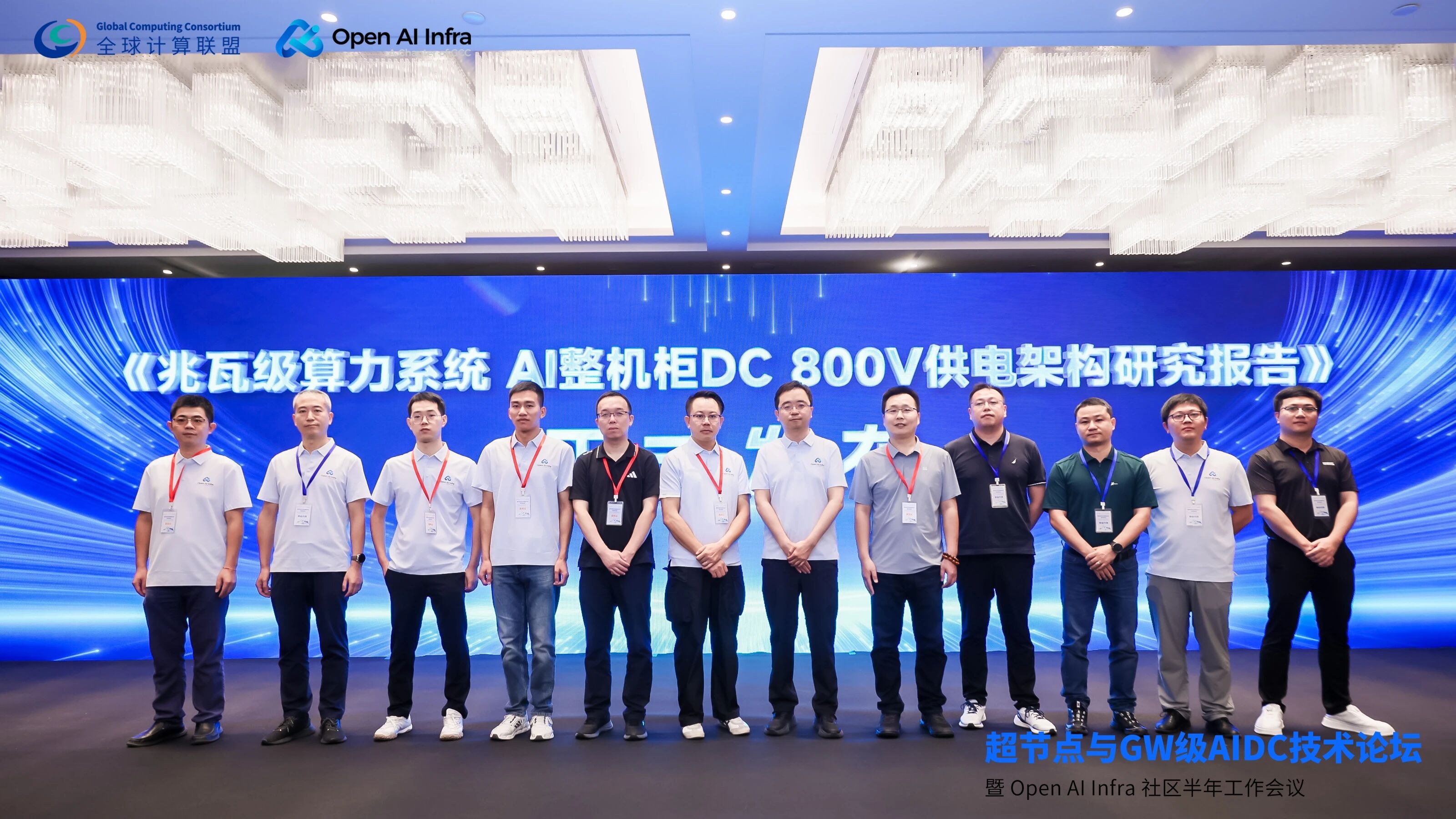
[Image: Release slide: Research Report on DC 800V Power Architecture for AI Racks in Megawatt-Class Computing Systems.]
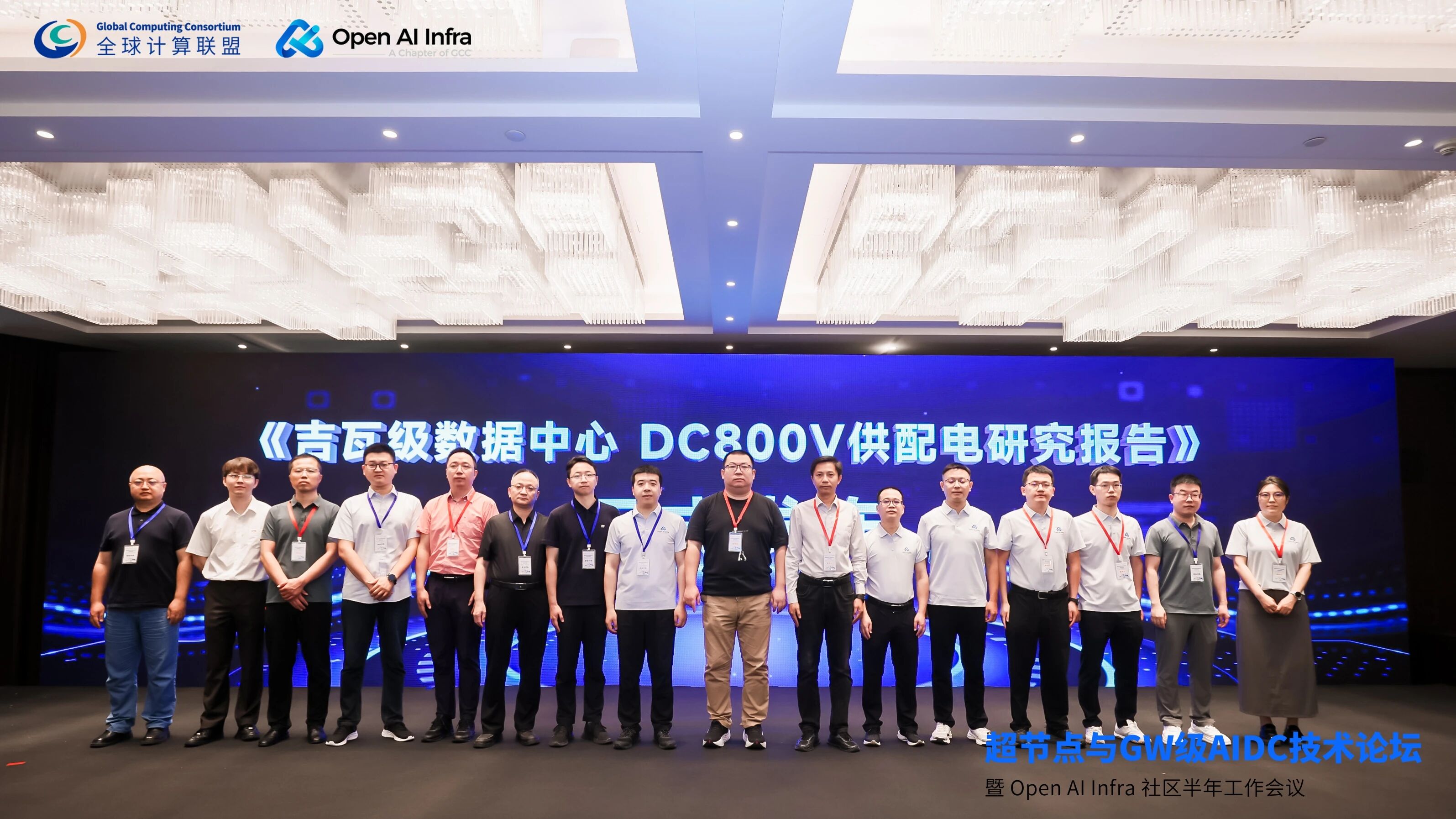
[Image: Release slide: Research Report on DC 800V Power Supply and Distribution for Gigawatt-Class Data Centers.]
OPEN NPO Project Launched to Build the Next-Generation High-Speed Interconnect Ecosystem
During the event, the Open AI Infra Community officially launched the OPEN NPO (Near Package Optics) project. The project focuses on key technologies for photonic near-package interconnect in SuperPods, and pursues joint innovation on high-speed interconnect architectures, key components, standards and specifications, and industry collaboration — accelerating the development of next-generation high-speed interconnect technologies.
The initial founding members of the project include China Mobile Research Institute, JD Cloud, Baidu, China Electronics Standardization Institute (CESI), Huawei, ZTE Software, H3C, Accelink Technologies, Nazhen Technology, HGTECH Zhengyuan, Lightelligence, Huafeng Technology, Yamaichi, Hirose, Molex, Luxshare Precision, Qinghong Electronics, Aoke Optoelectronics (Westlake Institute for Optoelectronics), Xinwei Technology, and Jiyiwei Semiconductor — jointly promoting next-generation high-speed interconnect technology innovation and open ecosystem development.
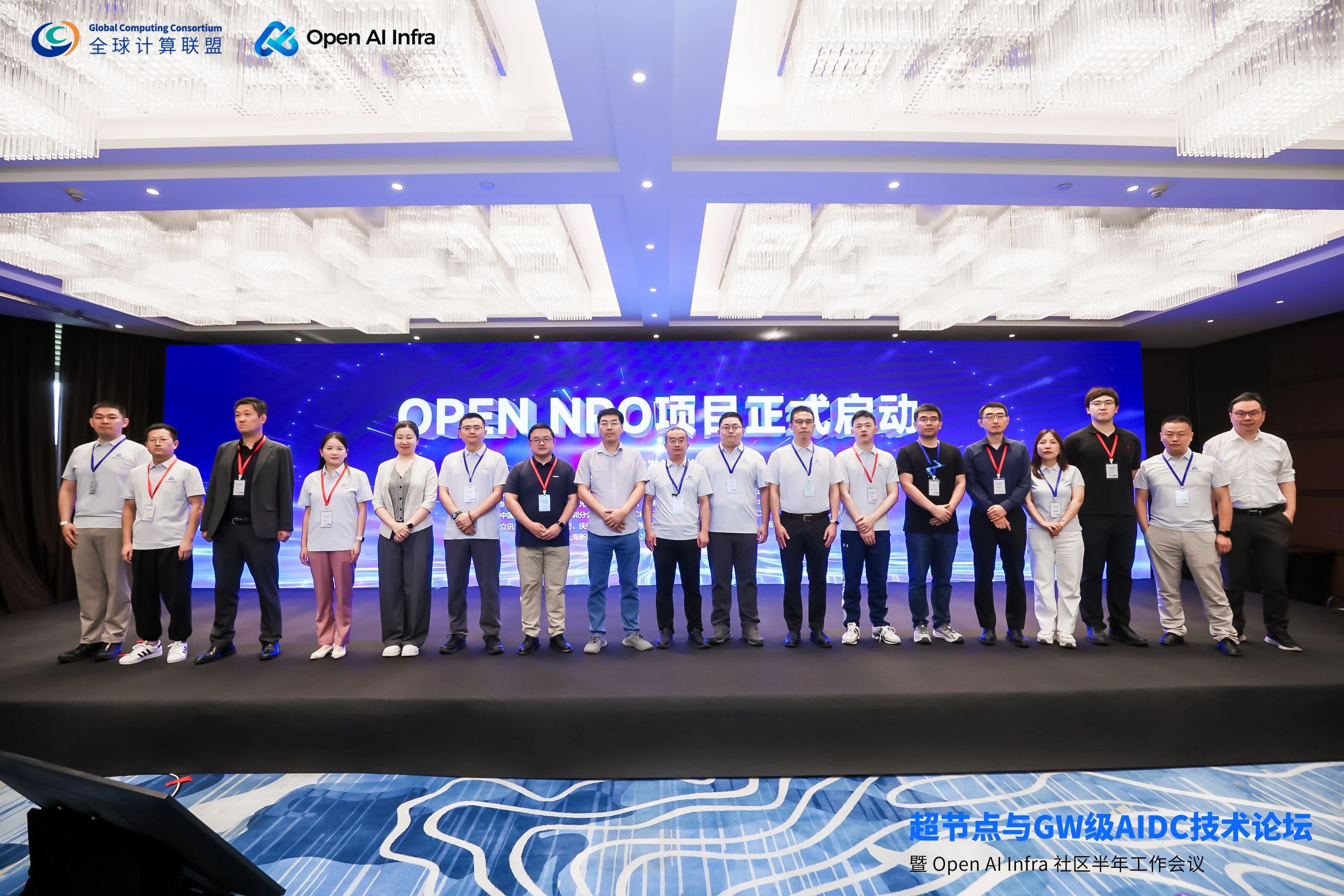
[Image: OPEN NPO project launch ceremony photo.]
Community Project Managers Officially Appointed to Further Enhance the Open Collaborative Innovation Mechanism
To further improve the community's project governance system, the event held the appointment ceremony for Open AI Infra Community project managers. Twenty-two technical experts from enterprises across the upstream and downstream of the industry chain were officially appointed as community project managers. They will organize and advance work on standards development, technical breakthroughs, testing and validation, and industry collaboration, focused on key areas such as liquid-cooled racks, AIDC infrastructure, DC 800V power supply and distribution, and high-speed interconnect.
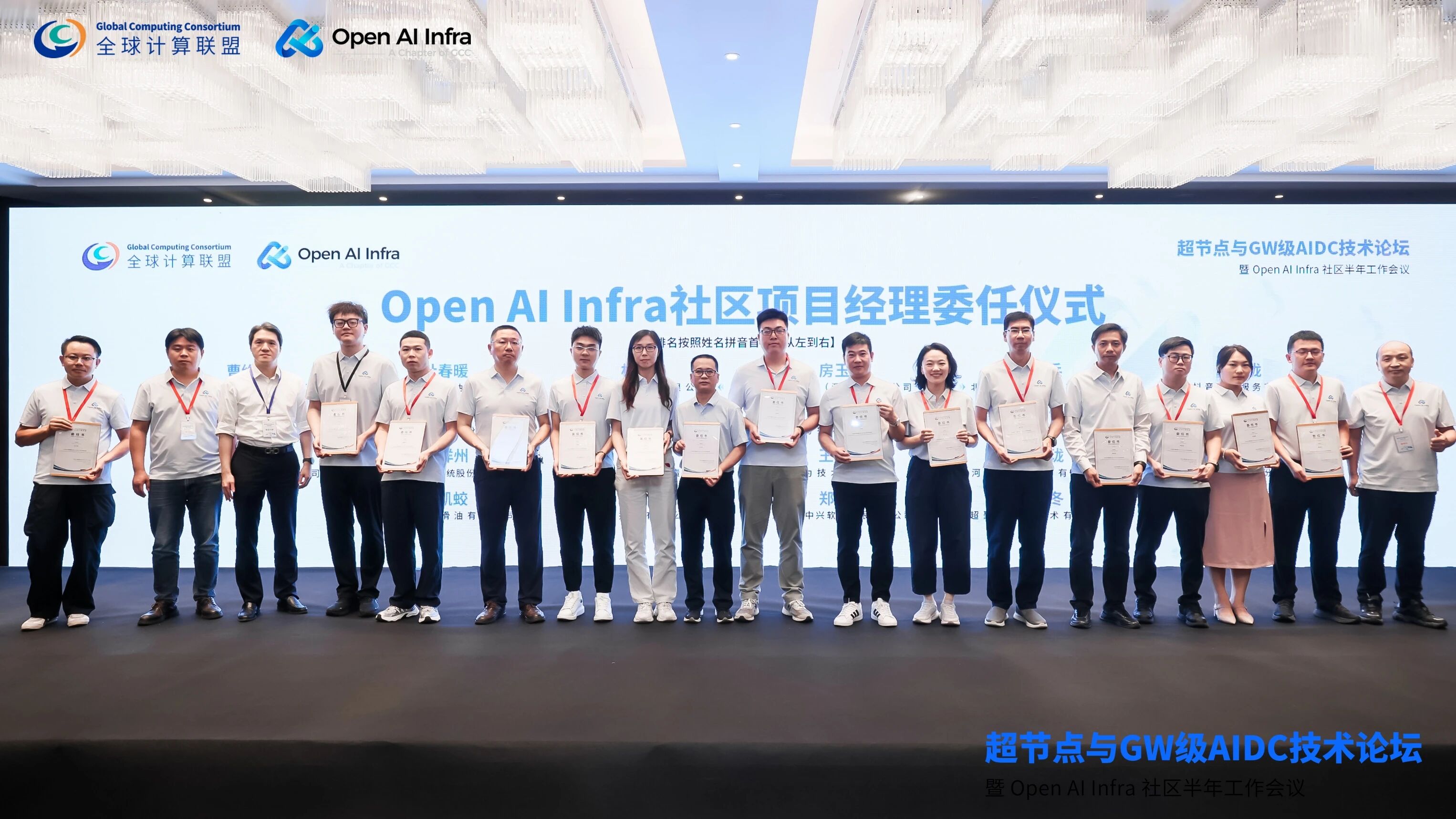
[Image: Photo of the Open AI Infra Community Project Manager Appointment Ceremony (names listed by pinyin initials, left to right).]
The formal establishment of the project manager team marks another step forward in the Open AI Infra Community's project management mechanism — one that now covers project planning, standards development, joint research, testing and validation, and industry promotion. This will continue to drive efficient execution of the community's key projects, and accelerate the formation of a collaborative development model characterized by "needs-driven, jointly innovated, standards-based, industry-deployed, and ecosystem-promoted" progress.
Continuing to Build an Open Collaboration Platform to Jointly Foster the AI Infrastructure Ecosystem
From the release of standards and specifications to the delivery of research outcomes, from the launch of high-speed interconnect projects to the strengthening of community organizational capacity, this event showcased the Open AI Infra Community's phased achievements and further demonstrated GCC's critical platform value in pooling industry resources and advancing open collaborative innovation.
Looking ahead, the GCC-Open AI Infra Community will continue to work with industry partners to advance standards development, joint research, testing and certification, and ecosystem cooperation around key AI computing infrastructure technologies — accelerating the construction of an open, collaborative, innovative, and mutually beneficial AI infrastructure industry ecosystem, and providing stronger infrastructure support for the high-quality development of the global AI industry.
This content is original to GCC and its copyright belongs to GCC. Without the written authorization of GCC, no organization or individual may use this content in any way (including but not limited to reprinting, excerpting, copying, distributing, or disseminating over information networks). This content is for reference only and does not constitute any form of advice or commitment. For any infringement issues, please contact icd@gccorg.com and we will handle them in accordance with the law.

 High Performance Computing Development Group(HPC DG)