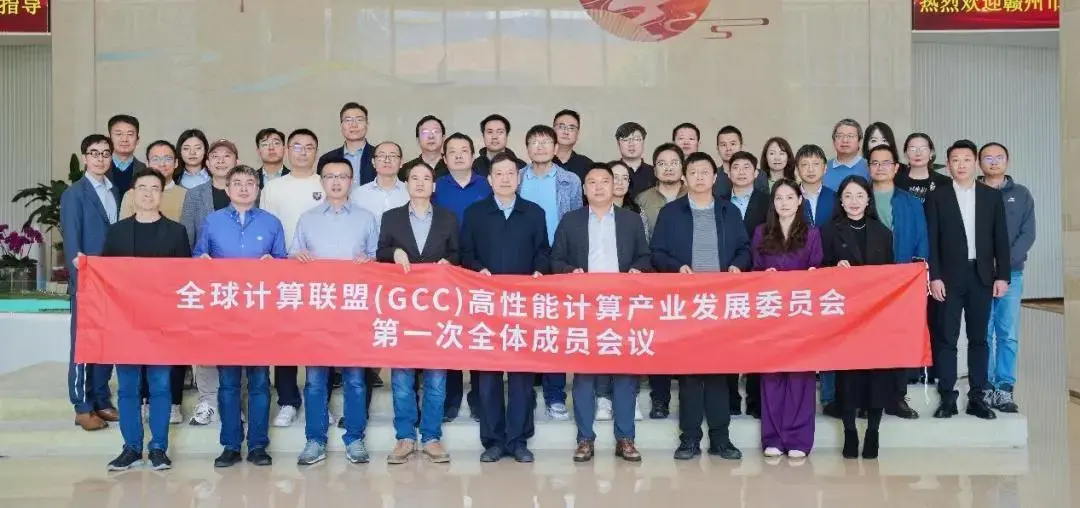
Industry Expectations: Gathering Global Wisdom to Jointly Promote the Development of the HPC Industry
At the beginning of the meeting, Qian Depei, Academician of the Chinese Academy of Sciences, delivered a speech as a special guest. Academician Qian reviewed the development history of high performance computing and emphasized its important role in scientific research, industrial manufacturing, and social life. He pointed out that the high performance computing industry is currently facing great opportunities and challenges, and the establishment of the HPC DG comes at the right time, carrying the important mission of gathering global industrial chain resources and promoting international cooperation. In his speech, Academician Qian called on all parties to fully leverage the platform’s ability to bring stakeholders together, strengthen deep integration among industry, academia, research, and application, accelerate technological innovation and achievement transformation, and promote the in-depth application of high performance computing in more industries.
Lu Yutong, Director of the National Supercomputing Center in Guangzhou/Shenzhen, emphasized in her speech that the HPC DG should focus on four major directions: technological breakthroughs, ecosystem building, global collaboration, and talent development. It should promote the industrialization of frontier high performance computing technologies from the laboratory and strengthen cooperation with international supercomputing institutions to jointly build a global pool of high performance computing power and application resources. She also stated that the Guangzhou and Shenzhen supercomputing centers will continue to contribute to the HPC DG by serving as an “accelerator” for technology transformation, a “bridgehead” for international cooperation, and a “responder” for joint talent cultivation.
Peng Peng, Secretary-General of the Global Computing Consortium, read out the resolution of the GCC Board of Directors, which approved the establishment of the High Performance Computing Development Group. Secretary-General Peng also stated that the establishment of the HPC DG is an important measure by GCC to promote deep integration among industry, academia, research, and application in the field of high performance computing. High performance computing has become a core engine driving scientific and technological revolution and industrial transformation. The establishment of the HPC DG will provide an open and collaborative platform for the global HPC industry, and promote ARM-based supercomputing construction, technical standards development, and the promotion of ecosystem achievements.
Voting and Election: Clarifying the Development Direction and Forming the Management Team
The meeting reviewed and approved the Plan for the First Plenary Meeting of the GCC High Performance Computing Development Group and the Working Regulations of the GCC High Performance Computing Development Group, laying a solid foundation for the standardized operation of the HPC DG. The meeting then elected the first Management Committee:
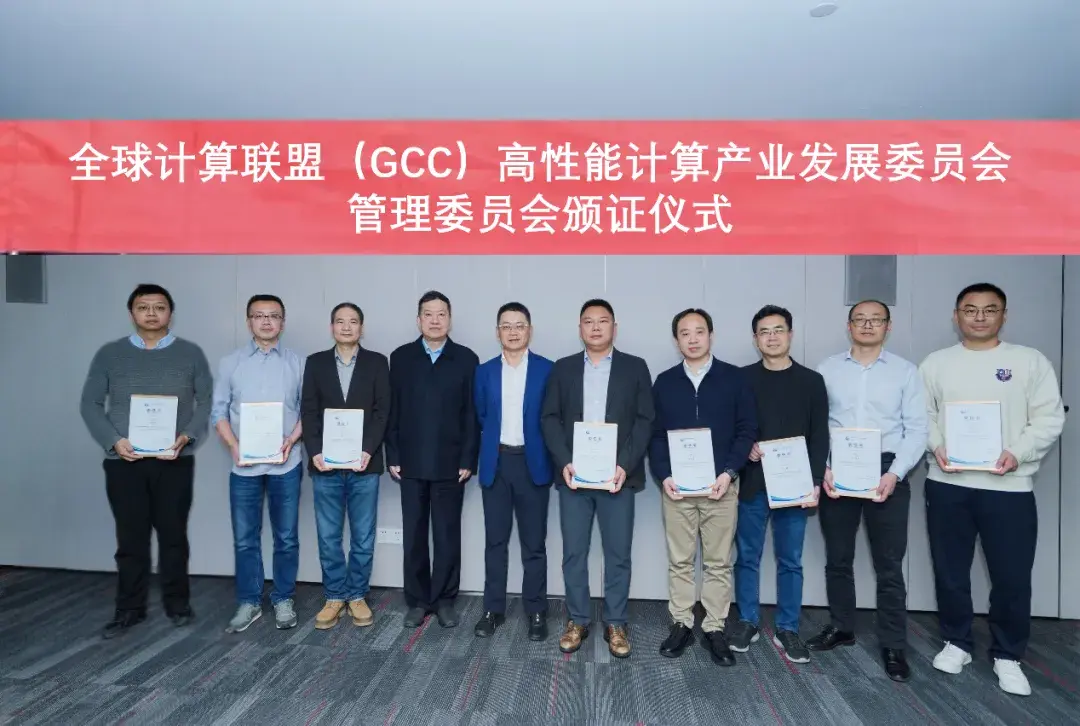
Chair: Lin Xinhua, Deputy Director of the Network & Information Center, Shanghai Jiao Tong University;
Vice Chairs: Fu Haohuan, Deputy Director of the National Supercomputing Center in Shenzhen; Tan Guangming, Researcher at the Institute of Computing Technology, Chinese Academy of Sciences; Zhang Hua, Vice President of Kunpeng Computing, Huawei Technologies Co., Ltd.;
Members: Ren Jie, EDA Director of Hangzhou Semitronix Co., Ltd.; Tian Feng, Senior Vice President of PERA Global Technology Co., Ltd.; Zhang Xudong, Director of the Supercomputing Center of the National Engineering Research Center for Oil and Gas Exploration Software Co., Ltd.; and others;
Member and Secretary-General: Sun Yu, Executive Dean of the Institute of Intelligent Pharmacy Interdisciplinary Research, China Pharmaceutical University.
After the voting and election were successfully completed, Academician Qian Depei and Secretary-General Peng Peng presented the plaque to the HPC DG and issued appointment letters to the elected Management Committee team. The HPC DG officially set sail. In the future, it will be committed to promoting the innovation and application of high performance computing technologies and supporting the prosperity of the global computing ecosystem.
Key Work Discussion: Focusing on Ecosystem Building, Industrial Implementation, and International Cooperation
In the following key work discussion session, chaired by Chair Lin Xinhua, the participants discussed industrial ecosystem building, technological breakthroughs, and international cooperation. Chair Lin Xinhua proposed four core development directions, including promoting industry consensus, building an open-source ecosystem, facilitating full-chain industrial collaboration, and strengthening talent cultivation. Several committee members and representatives of member organizations offered suggestions, emphasizing the need to accelerate toolchain standardization, connect the closed loop of industry, academia, research, and application, and jointly build an open ecosystem with international institutions. Fu Haohuan from the National Supercomputing Center in Shenzhen noted that the second phase of the supercomputing project will serve as an industrial engine to promote deep integration between computing power and AI. Zhang Hua from Huawei proposed introducing ARM ecosystem resources based on global deployment. Fan Chun, a university representative, called for stronger talent cultivation and resource connection.
At the same time, the meeting clarified that the HPC DG will focus on collecting industry needs, building benchmark cases, and promoting international cooperation, helping high performance computing empower various industries and inject new vitality into the global industrial ecosystem.
Thematic Discussion: Based on a Global Perspective, Optimizing the Industrial Chain and Promoting the Development of the HPC Industry
In the afternoon, the meeting also held a thematic discussion under the theme of “Based on a Global Perspective, Optimizing the Industrial Chain and Promoting the Development of the HPC Industry.” The discussion was chaired by Sun Yu, the newly elected Secretary-General of the HPC DG. Four speakers shared experience summaries and future plans from the perspective of HPC implementation practices across different industries:
Fu Haohuan from the National Supercomputing Center gave a presentation titled “Development of Earth System Models Supported by the Integration of Supercomputing and Intelligent Computing,” exploring the application prospects of integrating supercomputing and intelligent computing in earth system models, and emphasizing the importance of computing power integration for climate change research and disaster warning.
Zhang Xudong from BGP Inc. shared on the topic of “Computing with China’s ‘Core’ to Enable Geophysical Prospecting with China’s ‘Core’,” analyzing the application potential of domestic high performance computing chips in oil and gas exploration, and calling for stronger implementation of the ARM ecosystem in the geophysical prospecting industry.
Tian Feng from PERA Global delivered a presentation titled “The Development History, Current Status, and Trends of CAE HPC,” reviewing the development history of high performance computing in the CAE field and looking ahead to future trends in the integration of CAE and AI.
Ren Jie from Semitronix focused on “Applications, Challenges, and Prospects of HPC in the EDA Industry,” sharing practical applications of HPC in chip design and putting forward key suggestions on inclusive computing power and ecosystem building.
Looking Ahead: Working Together to Build a Global HPC Ecosystem
The successful convening of this meeting has injected new momentum into the development of the global high performance computing industry. Relying on the platform advantages of the Global Computing Consortium, the HPC DG will gather global wisdom, promote technological innovation and industrial implementation, and make outstanding contributions to the prosperity and progress of the global high performance computing ecosystem.
In the future, the HPC DG will focus on four major directions: technological breakthroughs, ecosystem building, global collaboration, and talent cultivation. It will promote the in-depth application of high performance computing in scientific computing, industrial software, artificial intelligence, and other fields, and support the vigorous development of the global digital economy.
More global partners are welcome to join the High Performance Computing Development Group.
Contact: Ms./Mr. Ou, 13823146017

 High Performance Computing Development Group(HPC DG)