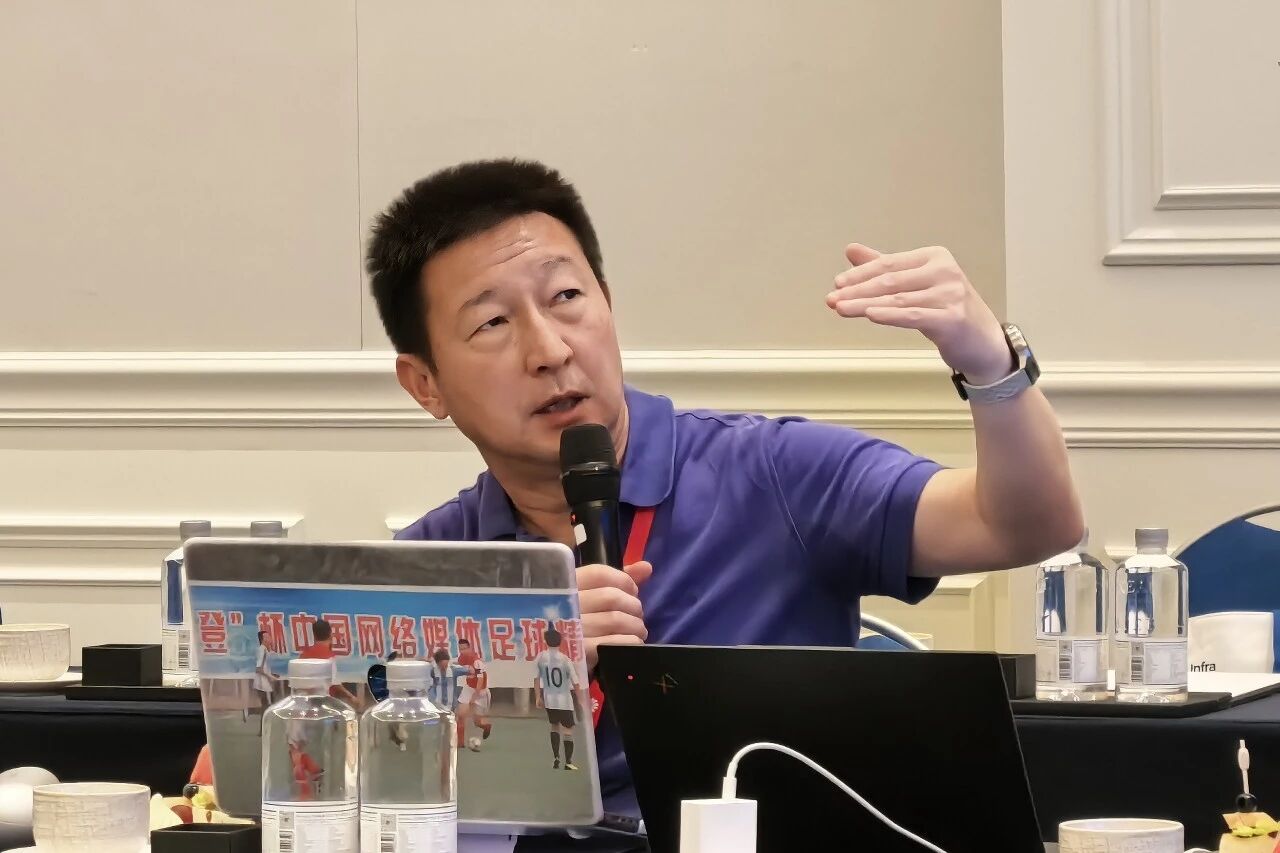
On May 16, the Global Computing Consortium (GCC) hosted an AIDC International Exchange Roundtable for computing industry partners from multiple Eurasian countries. In-depth discussions were held on topics including global AIDC development trends, standards system construction, multi-vendor adaptation, and industrial collaboration. As a key initiative by GCC to advance global cooperation, this roundtable further signaled the Consortium's active efforts to connect international industrial resources and promote the synergistic development of the global computing ecosystem.
With the rapid deployment of AI large models and intelligent agent applications, AIDC is emerging as a major direction for the evolution of global computing infrastructure. Participants widely agreed that, against the backdrop of rapid advancements in high-density, liquid-cooled, modular, and large-scale construction of computing centers, the industry now faces not just single-point technological optimization, but systemic challenges encompassing power supply and distribution, cooling, lack of standards, cross-vendor adaptation, and energy consumption control. By establishing a cross-regional, cross-industry exchange platform, GCC provides a more open and collaborative space for dialogue on global AIDC development.
During the roundtable, Hu Wenbiao, Director of International Ecosystem Development at GCC, presented the Consortium's latest progress and achievements, systematically demonstrating GCC's phased results in standards development, ecosystem organization, and international cooperation. Zhang Guangbin, Secretary-General of the Open AI Infra Community and Founder of Eayuan Research Institute, engaged in a lively discussion with representatives from design institutes, OEMs, component and material suppliers, colocation service providers, and engineering and maintenance companies on practical issues within the AIDC industry. From diverse industrial perspectives, parties exchanged views on key pain points in AIDC construction, collaborative pathways, and directions for future cooperation.

Hu Wenbiao, Director of International Ecosystem Development at GCC
Zhang Guangbin, Secretary-General of the Open AI Infra Community and Founder of YiQi Research Institute
Participants generally agreed that the AIDC industry chain is long and highly systematic, making it difficult for a single enterprise to independently complete the entire closed loop from architecture design to engineering delivery. There is an urgent need for an open platform to promote joint standard development, experience sharing, and capability mutual recognition. Many representatives stated that GCC plays a positive role in promoting global computing industry collaboration and facilitating regional industrial dialogue, and expressed hope for further enhanced communication to encourage more countries and regions to participate in the co-development of the global computing ecosystem.
This AIDC International Exchange Roundtable further strengthened mutual trust and connections between GCC and global industrial partners, while laying the groundwork for deeper future cooperation in joint standard setting, technical collaboration, and project partnerships.
In recent years, GCC has consistently pursued its vision of "Empowering the Digital Society with Next-Generation Computing," intensifying efforts in governance, ecosystem development, technology, international cooperation, and industry promotion. Its membership has grown to over 400, covering the entire industrial chain from computing infrastructure, chips, and OEMs to software and industry users. Additionally, the Consortium has established a Strategic Advisory Committee chaired by Gao Wen, an academician of the Chinese Academy of Engineering, and has formed 12 branch committees covering core areas such as AI Infrastructure, Intelligent Computing, High-Performance Computing, Confidential Computing, and Embodied Intelligence.
In terms of technological innovation, GCC has produced over 70 outputs, developed 27 group standards, published 13 research reports, completed 30 test certifications, selected and promoted more than 150 benchmark cases, and achieved multiple "firsts" in areas such as AI super-nodes, AIDC, cluster performance benchmarks, the HiFloat low-precision data format, local compatibility certification for ARM architecture, confidential computing, and computing firmware, thereby solidifying the technological foundation for industrial development.
In international cooperation, GCC has established strategic partnerships with international organizations including the Global Platform (GP) in North America, The Open Edge and HPC Initiative (OEHI) in Europe, and the National Information and Communications Technology Association of Malaysia (PIKOM). It has also set up joint centers in Central Asia and Southeast Asia, continuously promoting cross-regional exchange of global computing standards, experiences, and resources.
Looking ahead, GCC will continue to leverage its role as an international industry platform, focusing on key areas such as AIDC, liquid-cooled rack-scale systems, power supply and distribution, super-nodes, and test certification. It will persistently refine technical specifications and toolkits, facilitate the transition of AIDC from consensus to implementation, and from localized exploration to large-scale replication, providing sustained support for the high-quality development of intelligent computing infrastructure both domestically and globally.

 High Performance Computing Development Group(HPC DG)