On June 13, the "Smart Gathering in Shicheng · Advancing Together through Science and Technology" Promotion Conference on Intelligent Power Inspection Achievements Based on Domestic AI Computing Architecture was successfully held in Shihezi, Xinjiang. This marked the launch of the first model site for a power industry operator library developed based on the Ascend CANN platform, jointly established by the Global Computing Consortium (GCC) Intelligent Computing Industry Development Committee and its member unit, Hangzhou Tiankuan Technology Co., Ltd. Centered on this model site, the GCC Intelligent Computing Industry Development Committee shared industry-coordinated practices and industrial co-construction plans in areas such as domestic computing ecosystem development, intelligent computing industry implementation, and joint development of industry-specific operator libraries.
As the digitalization, intellectualization, and localization of the power industry accelerate, promoting the deep integration of domestic AI computing power, industry-specific algorithms, intelligent hardware, and real-world scenarios has become a critical direction for industry development. This event focused on the practical application of domestic AI computing architectures in intelligent power inspection scenarios, inviting multiple leading organizations from industry and academia to engage in exchanges. GCC was invited to share its achievements in intelligent computing and embodied intelligence.
At the event, Gao Pan, Deputy Secretary of the Party Committee and Dean of the School of Information Science and Technology at Shihezi University, delivered a keynote speech titled "Integrating Industry and Education to Cultivate Talent, Empowering the Future with AI." Drawing on the specific application scenarios of the intelligent power inspection solution, Dean Gao Pan shared the significant implications of combining domestic AI computing architectures with power inspection scenarios for university practical teaching, improvement of students' engineering capabilities, and the intelligent development of the power industry, from the perspectives of industry-education integration, student practice, talent cultivation, and alignment with industry demands.
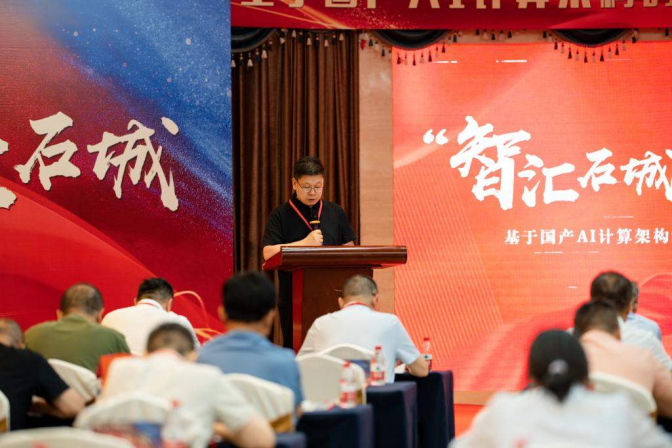
Gao Pan, Deputy Secretary of the Party Committee and Dean of the School of Information Science and Technology, Shihezi University
GCC presented a talk titled "Jointly Building a New Domestic Computing Ecosystem and Promoting Intelligent Computing Implementation in Industries," highlighting the work carried out by the Intelligent Computing Industry Development Committee in areas such as intelligent computing technology innovation, industrial ecosystem prosperity, and industry application deployment. In conjunction with the intelligent power inspection achievements, GCC shared its collaborative practice with Tiankuan Technology, using the CANN-based power industry operator library as a model site to explore pathways for developing industry operator libraries, co-building the CANN secondary ecosystem, and promoting the scenario-based adoption of domestic intelligent computing. GCC also shared its industry observations and ecosystem layout in the field of embodied intelligence.
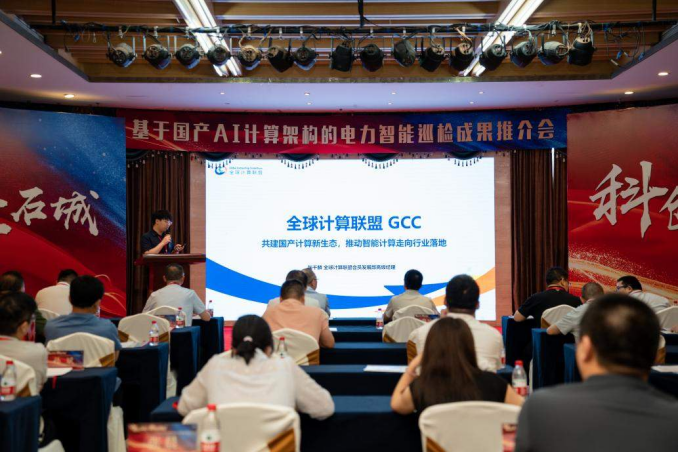
Zhang Qianlin, Senior Manager of Membership Development, Global Computing Consortium
This power industry operator library model site represents a key practice by the GCC Intelligent Computing Industry Development Committee to promote the integration of industry applications with the domestic computing ecosystem. Built upon the CANN operator library in Tiankuan Technology's intelligent power inspection solution, the model site addresses real business needs such as AI-based power inspection, defect recognition, and scenario adaptation, creating demonstrable, replicable, and scalable industry application cases. Through this model site, GCC will further connect industry users, ecosystem partners, university research teams, and developer resources to advance the development of dedicated power industry operator libraries, scenario-specific solutions, and developer contribution mechanisms, exploring a replicable pathway for CANN secondary ecosystem industry models.
Chen Jiahong, Distinguished Researcher of the China Electricity Council, presented the appraisal results for the "Intelligent Power Inspection Achievements Based on Domestic AI Computing Architecture." At a closed-door appraisal meeting held earlier that day, the expert panel concluded that the achievements meet the application effectiveness required for product declaration, are at a leading domestic level overall, and provided professional recommendations on subsequent scenario optimization, technical feature enhancement, and large-scale promotion.
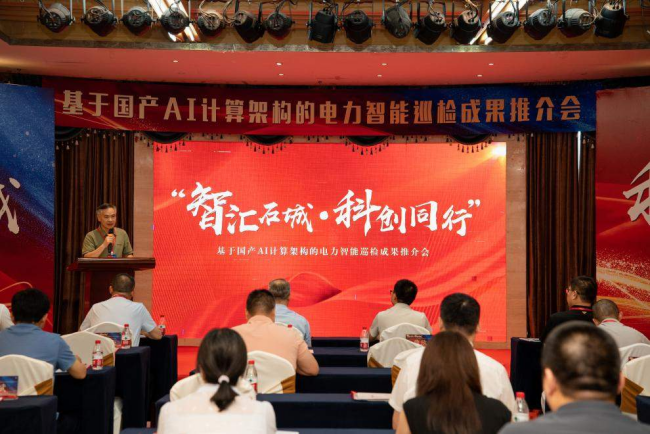
Chen Jiahong, Distinguished Researcher, China Electricity Council
As the host of this event, Wen Zhengke, Product Director of GCC Golden Member Hangzhou Tiankuan Technology Co., Ltd., delivered a special presentation on the actual pain points of intelligent inspection in the power industry and the application pathways of localized solutions. Drawing on this power inspection project, he detailed Tiankuan Technology's practical implementations and future plans for the integrated application of AI and embodied intelligence, with particular emphasis on the CANN-based power industry operator library, model deployment optimization, and scenario adaptation capabilities developed in the project, demonstrating Tiankuan's technical expertise and engineering capabilities in building domestic AI-powered power inspection solutions.
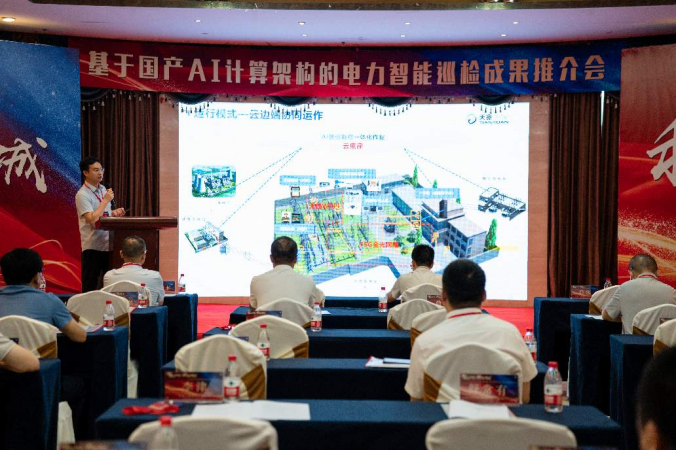
Wen Zhengke, Product Director, Hangzhou Tiankuan Technology Co., Ltd.
Zhu Jianxing, Solution Lead for Xinjiang Region of Hangzhou DeepRobotics Technology Co., Ltd., shared technical insights on the hardware component of the inspection robotic dog used in this solution and introduced application cases of DeepRobotics' quadruped robots in power inspection and other industry scenarios. As a representative enterprise in the quadruped robot field, DeepRobotics presented relevant robot models, product features, and scenario adaptation capabilities tailored to different inspection environments and task requirements, showcasing the value of intelligent robotic platforms in complex power inspection scenarios.
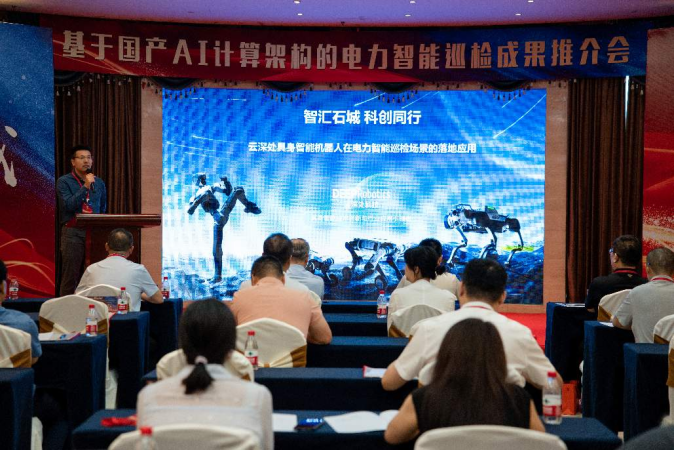
Zhu Jianxing, Solution Lead for Xinjiang Region, Hangzhou DeepRobotics Technology Co., Ltd.
Next Steps: The GCC Intelligent Computing Industry Development Committee will leverage the power industry operator library model site as a springboard to continuously advance the ecosystem co-construction mechanism of "Industry Seminars – Co-Creation Competitions – Certification Training – Achievement Promotion":
-
Starting July: Launch industry model site seminars to organize power enterprises, solution partners, university research teams, and ecosystem units in jointly identifying industry requirements and best practices around real needs such as AI-based power inspection, defect recognition, and scenario adaptation. Concurrently, preparations for the Ascend Innovation Competition will proceed, covering general operator development, industry operator development, and industry solutions, including competition topic design, topic proposer invitations, team organization, and achievement commercialization mechanisms.
-
Starting August: Initiate Ascend C offline examination and certification programs. Combined with Ascend skills training and the GCC Developer Elite Program, progressively build a developer cultivation system oriented toward the domestic computing ecosystem.
Through these efforts, the GCC Intelligent Computing Industry Development Committee will drive the accumulation of more industry-specific operator libraries, industry solutions, and outstanding developer achievements, accelerating the implementation of domestic intelligent computing technologies in the power industry and across additional industry scenarios.
About GCC Intelligent Computing Industry Development Committee:
Committed to building China's most influential and globally impactful intelligent computing industry development platform, the Committee addresses critical pain points in the development of the intelligent computing industry and promotes the healthy and sustainable growth of the global intelligent computing industry. It currently comprises over 100 member units, covering the entire industry chain including chips & components, systems & computing infrastructure, software & ISVs, models & applications, industry users, and academic & think-tank institutions.

 High Performance Computing Development Group(HPC DG)