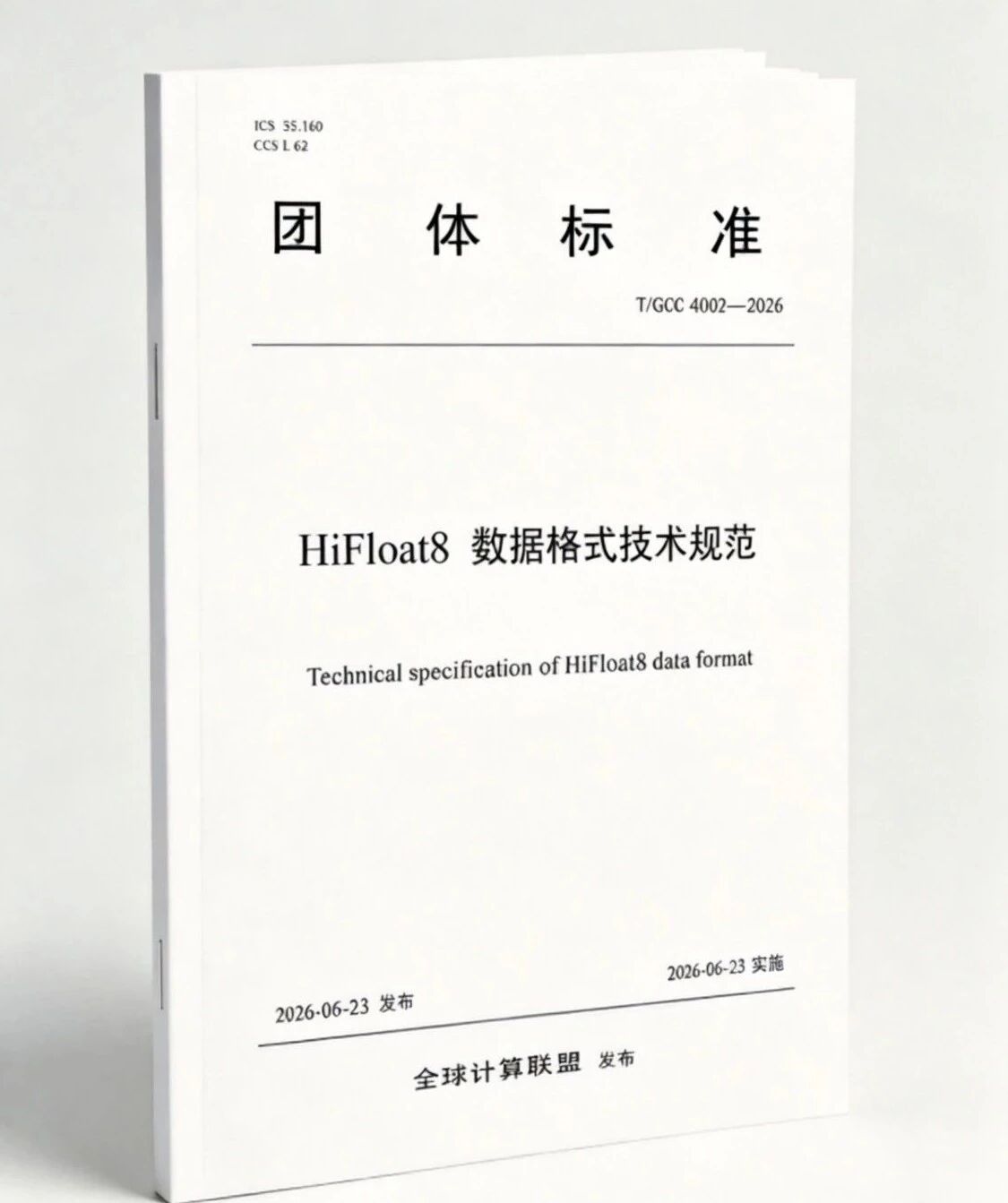
On June 23, 2026, the Global Computing Consortium (GCC) officially released and implemented the group standard Technical Specification of HiFloat8 Data Format. Targeting intelligent computing training and inference scenarios, the standard is the first to systematically specify the technical requirements of the HiFloat8 floating-point data format, providing the intelligent computing industry with a unified and open new 8-bit floating-point data format specification. Balancing dynamic range, numerical precision, and engineering efficiency, it further promotes the coordinated development of the AI software and hardware ecosystem.
The Technical Specification of HiFloat8 Data Format defines the technical requirements of the HiFloat8 binary data format, including data format definition, encoding rules, and format conversion requirements. It applies to AI model training and inference based on 8-bit floating-point data formats, as well as related scenarios such as software development, test verification, and performance evaluation.
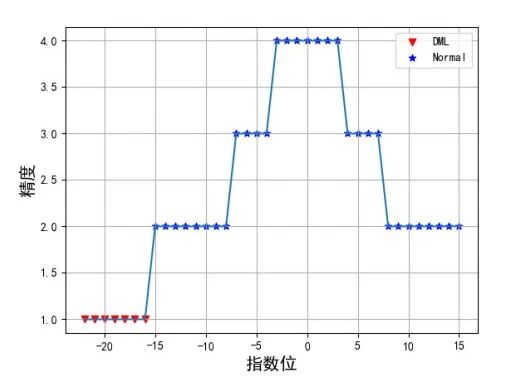
HiFloat8 adopts an innovative data encoding design that achieves tapered accuracy and non-redundant encoding under a fixed 8-bit width. Compared with traditional designs that use fixed exponent and mantissa bit widths, HiFloat8 can dynamically adjust the effective precision according to the numerical range. It preserves a wide dynamic range while improving data representation efficiency, better adapting to the distribution characteristics of data across different orders of magnitude in AI computing.
The standard defines two encoding modes for HiFloat8: normalized numbers (NML) and denormalized numbers (DML). It also provides unified encoding rules for special values such as zero, infinity, and NaN (Not a Number). In addition, the standard specifies conversion requirements between HiFloat8 and higher-precision floating-point formats such as FP32, FP16, and BF16, including saturation mode, non-saturation mode, and rounding rules — providing a consistent basis for data conversion across different computing precisions.
The group standard Technical Specification of HiFloat8 Data Format was organized and formulated by the Global Computing Consortium, jointly completed by multiple organizations from industry, academia, and research institutions, including: Huawei Technologies Co., Ltd., Shanghai Artificial Intelligence Innovation Center, iFLYTEK Co., Ltd., South China University of Technology, Shanghai SenseTime Technology Development Co., Ltd., Tsinghua University, Peking University, Beihang University, Zhejiang Lab, China Electronics Standardization Institute (CESI), China Telecom Research Institute, Beijing Digital China Kunpeng Information Technology Co., Ltd., Henan Kunlun Technology Co., Ltd., China Telecom Cloud Technology Co., Ltd., Beijing CAS Jiahe Intelligent Technology Co., Ltd., Xiao Duan Computing (Nanjing) Technology Co., Ltd., Shenzhen Yuxian Microelectronics Computing Co., Ltd., Guangzhou Guangdian Wuzhou Technology Co., Ltd., Hangzhou Tiankuan Technology Co., Ltd., Shenzhen Institute of Big Data, Phytium Information Technology Co., Ltd., Shenzhen Langli Semiconductor Co., Ltd., Peng Cheng Laboratory, Full-Chip Manufacturing Technology Co., Ltd., and Shenzhen Open Source Co-Creation Technology Co., Ltd. This fully reflects the development concept of collaborative innovation among industry, academia, and research institutions.
GCC will continue to work with industry parties to further improve the HiFloat-related standards system and promote the deployment of these standards in more application scenarios such as AI training, inference, and high-performance computing. This will provide stronger technical support for the high-quality development of the AI industry and foster a more open, efficient, and interoperable AI computing ecosystem across vendors.
Scan the QR code to visit the GCC official website and obtain the full text of the standard.
For further information or to participate in HiFloat-related technical discussions, joint standards development, industry co-innovation, and ecosystem cooperation activities, please contact: gcc_hifloat@gccorg.com
This content is original to GCC and its copyright belongs to GCC. Without the written authorization of GCC, no organization or individual may use this content in any way (including but not limited to reprinting, excerpting, copying, distributing, or disseminating over information networks). This content is for reference only and does not constitute any form of advice or commitment. For any infringement issues, please contact icd@gccorg.com and we will handle them in accordance with the law.
GCC will continue to work with industry parties to further improve the HiFloat-related standards system and promote the deployment of these standards in more application scenarios such as AI training, inference, and high-performance computing. This will provide stronger technical support for the high-quality development of the AI industry and foster a more open, efficient, and interoperable AI computing ecosystem across vendors.

Scan the QR code to visit the GCC official website and obtain the full text of the standard.
For further information or to participate in HiFloat-related technical discussions, joint standards development, industry co-innovation, and ecosystem cooperation activities, please contact: gcc_hifloat@gccorg.com
This content is original to GCC and its copyright belongs to GCC. Without the written authorization of GCC, no organization or individual may use this content in any way (including but not limited to reprinting, excerpting, copying, distributing, or disseminating over information networks). This content is for reference only and does not constitute any form of advice or commitment. For any infringement issues, please contact icd@gccorg.com and we will handle them in accordance with the law.

 High Performance Computing Development Group(HPC DG)